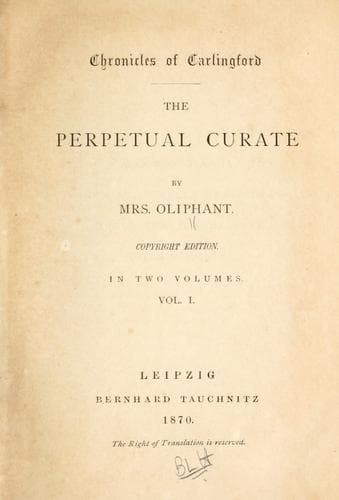
Clergy -- Fiction; England -- Social life and customs -- 19th century -- Fiction
district, with a studious unconsciousness of Mr Wentworth; and all but
declined to receive better information when Mr Wodehouse proffered it.
Matters were scarcely better in the drawing-room, where Lucy was
entertaining everybody, and had no leisure for the Perpetual Curate.
He took his hat with a gloomy sentiment of satisfaction when it was
time to go away; but when the green door was closed behind him, Mr
Wentworth, with his first step into the dewy darkness, plunged
headlong into a sea of thought. He had to walk down the whole length
of Grange Lane to his lodging, which was in the last house of the row,
a small house in a small garden, where Mrs Hadwin, the widow of a
whilom curate, was permitted by public opinion, on the score of her
own unexceptionable propriety,[A] to receive a lodger without loss of
position thereby. It was moonlight, or rather it ought to have been
moonlight, and no lamps were lighted in Grange Lane, according to the
economical regulations of Carlingford; and as Mr Wentworth pursued his
way down the dark line of garden-walls, in the face of a sudden April
shower which happened to be falling, he had full scope and opportunity
for his thoughts.
These thoughts were not the most agreeable in the world. In the first
place it must be remembered that for nearly a year past Mr Wentworth had
had things his own way in Carlingford. He had been more than rector, he
had been archdeacon, or rather bishop, in Mr Proctor's time; for that
good man was humble, and thankful for the advice and assistance of his
young brother, who knew so much better than he did. Now, to be looked
upon as an unauthorised workman, a kind of meddling, Dissenterish,
missionising individual, was rather hard upon the young man. And then he
thought of his aunts. The connection, imperceptible to an ignorant
observer, which existed between the Miss Wentworths and Mr Morgan, and
Lucy, and many other matters interesting to their nephew, was a
sufficiently real connection when you came to know it. That parish of
his own which Miss Wodehouse had wished him--which would free the young
clergyman from all trammels so far as his work was concerned; and would
enable him to marry, and do everything for him--it was in the power of
the Miss Wentworths to bestow; but they were Evangelical women, very
public-spirited, and thinking nothing of their nephew in comparison with
their duty; and he was at that time of life, and of that disposition,
which, for fear of being supposed to wish to deceive them, would rather
exaggerate and make a display of the difference of his own views. Not
for freedom, not for Lucy, would the Perpetual Curate temporise and
manage the matter; so the fact was that he stood at the present moment
in a very perilous predicament. But for this family living, which was,
with their mother's property, in the hands of her co-heiresses, the
three Miss Wentworths, young Frank Wentworth had not a chance of
Public-domain text, read in full here on John Shaqi.
Reviews
Reviews
No reviews yet
Be the first to share your thoughts on this work.
Join the Discussion
Join the discussion
Sign in to leave a comment or review.
Sign InorCreate an account