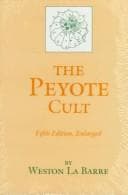
Indians of North America -- Religion; Indians of North America -- Rites and ceremonies; Peyotism
[118] Cf. Petrullo, _The Diabolic Root_, 116. Spybuck follows this
Caddo-Delaware custom (Voegelin, _Shawnee Field Notes_.) Cf. the painting
in Harrington (_Religion and Ceremonies_, pl. 9); but Spybuck is Shawnee
not Delaware.
[119] The Osage case is offered thus tentatively as it was in answer to
a leading question in a public hearing. See Office of Indian Affairs,
_Discussion Concerning Peyote_, 44.
[120] Certainly doctoring was the most important element in the
Southwest; cf. Bennett and Zingg, _The Tarahumara_, 294: “The use of
peyote resembles an elaborate curing ceremony [among the Tarahumari]
rather than a cult.” Opler (_The Influence of Aboriginal Pattern_) writes
that “Apache ceremonialism had for its primary object the curing of
disease,” and peyotism came within this framework.
[121] Radin, _A Sketch of the Peyote Cult_, 12-13; _The Winnebago Tribe_,
423.
[122] Densmore, _Winnebago Songs of the Peyote Ceremony_, 3.
[123] To be sure, diagnosis of illness by clairvoyance, etc., is resorted
to, but this is to be expected when witchcraft is the main cause of
sickness. (Cf. the combination of doctoring and divination with cohoba
snuff in Haiti. Safford, _Narcotic Plants_, 393.) Obsessive elements of
interest to psychiatry are found both in the witchcraft fear and in the
methods chosen to cure the ill.
[124] Kroeber, _The Arapaho_, 405.
[125] Kiowa and Comanche parallels with older doctoring methods have been
collected also. One of the latter involves a 2 foot mound in the tipi
with a cedar sprig on it, a fire, a woman assistant, smoking of tobacco,
and blowing on the patient.
[126] Densmore, _The Peyote Cult_; _Winnebago Songs of the Peyote
Ceremony_.
[127] Parsons, _Taos Pueblo_, 60, 67-68.
[128] Harrington, _Religion and Ceremonies_, 189; Skinner, _Societies of
the Iowa_, 725.
[129] Murie, _Pawnee Indian Societies_, 637.
[130] “[At] 5 o’clock in the morning, when suddenly the singing ceased,
the drum and the ceremonial staff were put away, and the leader,
beginning at the door, asked each person, ‘What did you see?’” (La
Flesche, in _Peyote as Used in Religious Worship_, 33).
[131] Radin, _A Sketch of the Peyote Cult_, 3; _The Winnebago Tribe_, 388.
[132] Radin, _Crashing Thunder_, 176; Densmore, _The Peyote Cult_.
[133] Wissler, _The American Indian_, 189: “One prominent feature of
Nahua life was the elaboration of the moral lecture. In the Pueblo region
of the Rio Grande the chiefs and head men were given to daily moral
lectures.... Perhaps we are again dealing with a general characteristic
of New World society.” Cf. the Tamaulipecan harangue (Prieto, _Historia y
Estadistica_, 123-24).
Public-domain text, read in full here on John Shaqi.
Reviews
Reviews
No reviews yet
Be the first to share your thoughts on this work.
Elsewhere in the archive
Join the Discussion
Join the discussion
Sign in to leave a comment or review.
Sign InorCreate an account