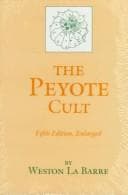
Indians of North America -- Religion; Indians of North America -- Rites and ceremonies; Peyotism
From these data, then, it may be well seen that peyotism functions
in all ways as a living religion: peyote christens the new-born and
protects their early years, teaches the young, marries young men and
women, rewards and punishes the behavior of adult years, and buries the
dead—offering throughout consolation for troubles, chastening for bad
deeds or thoughts, and serving as the focus for tribal and intertribal
life. Peyotism is without question the living religion of the majority of
Plains Indians today. Perhaps the statement of a Delaware may make this
clear:[18]
The old Delaware religion is too heavy for us who are
becoming few and weak. It is too difficult; Peyote is easy
in comparison. Therefore we who are weak take up this new
Indian religion. This is the very objection raised by the old
men, taking it up. But Peyote knows that the Indian’s burden
of becoming educated and at the same time keeping up the old
religion is too heavy, for he said that to the old woman who
was the first to discover our new religion. Peyote is to be the
Indians’ new religion. It is to be for all the Indian people
and only for them.
The intent of the present section was to give the reader some sense of
the emotional immediacy of peyotism to the present-day Plains Indian.
Such a study might properly be termed “functional,” and in biological
analogy corresponds to the physiology or dynamic aspect of the anatomy or
descriptive morphology attempted in our preceding discussion of cultural
traits and patterns. But we must at once abandon our analogy, lest like
some others we extrapolate illegitimately terms which have meaning in
one universe of discourse into another where they serve only to produce
confusion. In biology and medicine, anatomy may perhaps be understood
wholly divorced from palaeontological and physical-anthropological (i.e.,
historical) considerations, but this is peculiarly not the case with any
attempt to discuss a culture-pattern functionally or psychologically.
Here the immediacy and the momentum of past history, that is the
functioning of culture-patterns in terms of individuals, is precisely the
point at issue. And here the aggregation of traits into a complex is less
the result of organismic-biological factors than of “historical accident”
(e.g., the use of parched corn in the Plains ritual breakfast—its
function in the religious pattern of an agricultural economy having
long since been in abeyance). The traits of a complex do not gain
their relatedness or their adhesiveness from any biological-organismic
“function”; culture-traits are not chromosome-linked genes, and change of
one trait of a pattern need not organically change the rest. Indeed, if
we can speak of “the peyote cult” at all, it is only after demonstrating
its historical continuity as such.
Public-domain text, read in full here on John Shaqi.
Reviews
Reviews
No reviews yet
Be the first to share your thoughts on this work.
Elsewhere in the archive
Join the Discussion
Join the discussion
Sign in to leave a comment or review.
Sign InorCreate an account