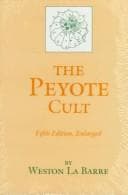
Indians of North America -- Religion; Indians of North America -- Rites and ceremonies; Peyotism
Hikuli walúla sälíami, “hikuli great authority,” is the
greatest of all; it is extremely rare, and Lumholtz never saw
a specimen, though it was described to him as “growing in
clusters of from eight to twelve inches in diameter, resembling
wanamé with many young ones around it.”[6]
Ocoyome, unlike the preceding hikuli which are good, is used
only for evil purposes. It has long white spines or “claws,”
and comes from the Devil. If accidentally touched with the
foot, it would break one’s leg; it also throws offenders
over precipices.[7] Lumholtz says it was very rarely used,
and Mooney says the Tarahumari used it not at all—though the
“Apaches” did—since it was “poison.” Mooney describes the plant
as having a reddish down, root and surface, which may account
for the Apaches’ tying it around their waists to make them
brave, in their battles.[8]
Bennett and Zingg are perhaps referring to the same plant under the name
“peyote cimarrón,” which is “small, red, and ineffective; it is not used
or even touched, since the abuser might die.” “Peyote christiano” (hikuli
dewéame), a larger, green variety, apparently Lophophora, is considered
the “most efficacious.”[9]
Bennett and Zingg give two other kinds of cactus used by the
Tarahumari:[10]
Witculíki (Mex. _biznaga_, _Mammillaria hyderi_), a ball cactus
of the gorges, is roasted about four minutes in ashes, after
being split and divested of its spines; the soft center is
squeezed into the ear in case of earache or deafness. (This
curiously echoes of the talking peyote stories.)
Bakánawa or bakánori, a small ball cactus, is used by the
Indians of the barrancas. Shamans, not peyoteros, carry small
bits of the root in their bags; it can be kept only three
years, after which it must be sold or hidden, lest the owner
go crazy. The shaman chews and anoints the patient with it. So
powerful is it that runners use it three days before racing;
one man died of fear after having offended this plant.
NON-CACTI
Of the ritually used narcotics of this area we have already discussed
the “mescal bean,” or _Sophora secundiflora_, and teo-nanacatl, the
sacred mushroom of the Aztec and Chichimeca.[11] The use of marihuana
(_Cannabis_ spp.) in counteracting sorcery, and other beliefs surrounding
its employment are also elsewhere discussed.[12] The use of the
mescal-bean of the southern Plains and the various alcoholic drinks[13]
of Mexico and the Southwest are perhaps related to the “black drink” made
of the leaves and twigs of the “beloved tree” (_Ilex cassine_), which
is distributed continuously from the Carolinas to the Rio Grande, with
a continuation of the trait across the Antilles into northeastern and
central South America.[14]
Public-domain text, read in full here on John Shaqi.
Reviews
Reviews
No reviews yet
Be the first to share your thoughts on this work.
Elsewhere in the archive
Join the Discussion
Join the discussion
Sign in to leave a comment or review.
Sign InorCreate an account