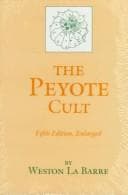
Indians of North America -- Religion; Indians of North America -- Rites and ceremonies; Peyotism
[34] Again compare peyote, particularly in the Plains.
[35] Kroeber (_Handbook_ 462, 589, 593, 609, 613-14) lists tribes who may
lack it. See also Kroeber, _Anthropology_, 309-311.
[36] Summarized from Gayton, citing W. D. Strong, _Aboriginal Society_.
[37] Cf. the preparation of peyote in Mexico.
[38] Summarized from Gayton.
[39] Cf. this and the following elements with peyote usages.
[40] Cf. the Mexican use of peyote.
APPENDIX 5: CHEMISTRY OF PEYOTE
Alkaloids are found in a number of cacti: _Cereus peruvianus_, _C. pecten
aboriginum_, _Pilocereus sargentianus_ Orcutt, _Phyllocactus ackermanii_,
_P. russelianus_, _Echinocereus mamillosus_, _Mammillaria cirrhifera_,
_M. uberiformis_, _M. centricirrha_, _Anhalonium prismaticum_, _A.
fissuratum_,[1] and _Lophophora williamsii_. _Lophophora_ in its mature
state, however, is notable for the number of alkaloids which it contains,
nine being known at present.
The long and hotly-disputed botanical question of _Anhalonium williamsii_
versus _A. lewinii_, beyond its ethnographic significance in accounting
the plants “male” and “female,” has a chemical aspect for a time
obscuring their botanical identity. _A. williamsii_ (young specimens of
_Lophophora_) contains only the alkaloid Pellotine,[2] while _A. lewinii_
(the mature _Lophophora_) contains at least nine, as follows:[3] Anhaline
(C₁₀H₁₅ON), Anhalamine (C₁₁H₁₅O₃N), Mescaline (C₁₁H₁₇O₃N), Anhalonidine
(C₁₂H₁₇O₃N), Anhalonine (C₁₂H₁₅O₃N), Lophophorine (C₁₃H₁₇O₃N), Pellotine
(C₁₃H₁₉O₃N), Anhalinine and Anhalidine. Lophophorine is an oily colorless
liquid; mescaline crystallizes only in the presence of atmospheric CO₂;
and anhalonidine crystallizes imperfectly; the rest are crystalline.
Their physiological activity appears to increase with their chemical
complexity.[4]
Hordenine was first isolated from _A. fissuratum_ by Heffter in 1894 and
shown to be identical with Späth’s anhaline from _Lophophora_ in 1920;
Heffter isolated pellotine in 1894, mescaline, anhalonidine, anhalonine
and lophophorine in 1896, Kauder adding anhalamine in 1899. Capellman
collaborated with Heffter on mescaline in 1905. If Heffter first isolated
the _Lophophora_ alkaloids, Späth is to be largely credited with
establishing their chemical constitution and synthesizing them: mescaline
in 1920, anhalamine in 1921, and anhalonidine and pellotine in 1922.
Röder in 1922 and Gangl in 1923 collaborated in establishing the chemical
constitution of others of the alkaloids.[5]
FOOTNOTES:
[1] Tschirsch, _Handbuch_, 680.
[2] Henry (T. A.), _The Plant Alkaloids_, 194; Moureu, _Review_, 519;
Heffter, _Ueber zwei Cacteenalkaloïde_, 2977; _Ueber Pellote_, 309 ff.;
Späth, _Über die Anhalonium_; I, _Anhalin und Mezcalin_, 129; Kunkel,
_Handbuch_, 836; Schumann, _Über giftige Kakteen_, 106.
[3] Henry (T. A.), _loc. cit._ The more recently discovered anhalinine
and anhalidine are cited from Schultes, _Peyote and Plants Used_, 134.
Public-domain text, read in full here on John Shaqi.
Reviews
Reviews
No reviews yet
Be the first to share your thoughts on this work.
Elsewhere in the archive
Join the Discussion
Join the discussion
Sign in to leave a comment or review.
Sign InorCreate an account