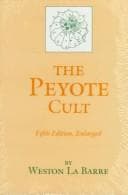
Indians of North America -- Religion; Indians of North America -- Rites and ceremonies; Peyotism
[42] An editorial _Paradise or Inferno?_ (Editorial, 390) sharply
rebuked Ellis for the attractiveness which he had ascribed to mescal
intoxication, basing the criticism on grounds of medical ethics.
[43] Letter to Schultes, Feb. 21, 1936. My own experience leads me fully
to endorse Hrdlička’s careful statement. Elsewhere in the text are cited
numerous cases of natives who, in good faith I believe, gave up the
use of peyote entirely upon the rising of special or acute anxieties.
My informants, on the other hand, quite as frankly admitted that there
were some individuals who showed signs of addiction, in the sense that
they consumed the plant often and abundantly, but these are not clear
uncomplicated instances of drug-addiction; I trust such native candor
implicitly. Besides, peyote is not wholly pleasant (“You must suffer to
peyote”).
[44] The issue of the native religious use of the drug is indeed a
complex one. But whatever else may be said, it is only fair to the
Indians to state that the bitterest and most unmeasured condemnations
of the drug have issued from quarters which are scarcely disinterested.
Whatever the merits of the case, those persons are concerned with the
deculturation of the Indian, and see in the peyote religion a formidable
obstacle to their progress in inducting the native into modern life. The
doubtless good intentions of such persons have on occasion, however,
led them into errors of judgment when, for instance, they would argue
that peyotism is merely out-and-out drug addiction in religious guise
(e.g. Daiker, Hughes, Newberne and Burke, Seymour, Watermulder, and the
writers in the Indian Rights Association and Literary Digest articles;)
Lindquist, for example, feels free to commit numerous errors of fact
yet still pontificate on the “false gods” of “the cult of Death” which
is “nothing but an evil” (_The Red Man_, 72, 73, 75). For, given the
Plains religious and ideological background, the peyote cult is entirely
plausible as a religion, and the issue is properly one of religious
freedom.
The intellectual “authority” in west European culture is, of course,
the empirical and pragmatic (or putatively), while that of the Indian
in this religion, as elsewhere, can correctly be termed mystical, if
we understand by this a super-normal knowledge-technique transcending
ordinary epistemological considerations. For there can be no shadow of
a doubt concerning the deep and humble sincerity of the worship and
belief—and sincerity perhaps, even in the absence of other ingredients,
is the chief component of a living religion. And if the chief function
of a religion is the liquidation of the anxieties and the solution of
the fears and troubles of its adherents, then surely the peyote religion
eminently qualifies as such.
Public-domain text, read in full here on John Shaqi.
Reviews
Reviews
No reviews yet
Be the first to share your thoughts on this work.
Elsewhere in the archive
Join the Discussion
Join the discussion
Sign in to leave a comment or review.
Sign InorCreate an account