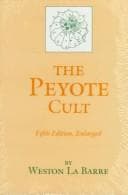
Indians of North America -- Religion; Indians of North America -- Rites and ceremonies; Peyotism
The issue then balances somewhat delicately on the point of “authority,”
which is really at bottom a matter of comparative ethnography. If, as
we believe, the scientific is truly the most mature knowledge-technique
man has yet perfected, then facile and off-hand condemnation of peyotism
on its basis is even less possible. Aside from the probable ultimate
disappearance of the Native American Church, a generous and libertarian
philosophy would condemn present attacks on it as often misguided and
even oftener uninformed. The chief human difficulty in the world today is
the adjustment of one culture to another, of one absolutistic ideology
and Weltanschauung to another. But the scientific spirit itself would
protest against the dictatorship of any one ideology, of whatever sort;
there is too much chance that any self-contained scheme be dangerously
wrong, when unchecked by modifying differing beliefs. Science, indeed,
has been lifted above the level of folklore precisely because the
spectacle of variously conditioned culture-historical outlooks has
necessitated self-criticism and an objective comparative survey of
beliefs. A fetishistic attitude toward science and its tentative
pronouncements, therefore, is itself folkloristic in tone. This however,
is not to suggest any distrust in the ability of the scientific method
to obtain such sound results as have been so far achieved; but it is
intended to point out the real limitations in our information.
Although the best modern scientific knowledge would indicate that the
alkaloids in peyote do not perform the manifold therapeutic miracles
which natives ascribe to it, one might still well wonder whether harsh
sumptuary laws would not work more positive hardship and harm than the
drug itself. If not the injustice then certainly the inexpedience of such
exercise of civil authority has been amply demonstrated in the Eighteenth
Amendment and its sorry consequences. We may not presume therefore to
judge what should be the administrative fate of the peyote cult. The
emotional and ideological side of the religion is not open to judgement;
and on the properly scientific and physiological side of the question the
simple fact is that we actually don’t know enough about it.
APPENDIX 7: JOHN WILSON, THE REVEALER OF PEYOTE
The life and career of a remarkable individual were successively involved
in the several traditions of the Ghost Dance, mescalism, old Algonquian
shamanistic “shooting” ceremonies and finally peyotism. Both for its
intrinsic interest and its historical significance we give here in some
detail the life of this man. Wilson appears first as a leader in the
Ghost Dance movement of the 1890’s. Mooney[1] writes:
Public-domain text, read in full here on John Shaqi.
Reviews
Reviews
No reviews yet
Be the first to share your thoughts on this work.
Elsewhere in the archive
Join the Discussion
Join the discussion
Sign in to leave a comment or review.
Sign InorCreate an account