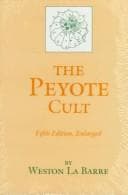
Indians of North America -- Religion; Indians of North America -- Rites and ceremonies; Peyotism
The Winnebago and Omaha of Nebraska, and also the Indians of South
Dakota, Wisconsin and Kansas have patterned their constitutions after
that of the original Oklahoma Native American Church. The Native American
Church is now also incorporated in Montana and Nebraska;[10] in the
latter state Jesse Clay was the first president[11] of an actively
evangelistic group which sends “missionaries” into new regions, ambitious
of making peyote the universal Indian religion. In Oklahoma there are
local tribal organizations within the Native American Church. For
example, among the Kickapoo there is a “men’s club” which meets after
every peyote meeting and a “women’s club” which meets on the second
Thursday of every month. The Ponca also have a “Ladies’ Auxiliary,” as do
also the Pawnee. These data are of course incomplete, but it is believed
that they are representative.
Of particular interest, however, is the Negro Church of the First-born,
formerly existing near Tulsa, Oklahoma.[12] The founder was John Jamison
who was born in Lincoln Co., Oklahoma. His parents for some reason were
given allotments, and he grew up among the Iowa, speaking Iowa, Pawnee
and Comanche. When he sought to take up the peyote cult, the younger men
were less friendly than the older ones; they resented a Negro’s taking
the “old Indian religion.” The rite which he conducted was the typical
Indian one, but involved more use of the Bible than was general; the
elements of the drum, gourd dishes for sacred food, medicine feathers,
cane, sage, cedar, canvas tipi and chief peyote button were all present.
Jamison sometimes dressed in a chief’s bonnet, blanket and moccasins. He
conducted meetings as far back as 1920 which Indians sometimes attended,
and occasionally he was sent for to conduct Indian meetings. In 1926
Jamison died of a brain concussion after he had been attacked by a
half-crazed Negro. The cult did not survive his death; it had never been
popular outside a small group, though some persons were attracted by the
healing he attempted to do. But even the devoted became suspicious when
they learned of Government hostility to their practices. As Mrs. Smith
writes,
This attitude on the part of the negroes is doubly interesting
in view of the rebellious attitude which the Indians displayed
under the same circumstances.
Public-domain text, read in full here on John Shaqi.
Reviews
Reviews
No reviews yet
Be the first to share your thoughts on this work.
Elsewhere in the archive
Join the Discussion
Join the discussion
Sign in to leave a comment or review.
Sign InorCreate an account