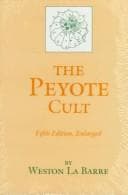
Indians of North America -- Religion; Indians of North America -- Rites and ceremonies; Peyotism
The ceremonial fire has no definitive association with peyotism in
Mexico,[58] though it is a prerequisite of the Plains rite even on the
hottest summer nights; nor has the copal incense of the Huichol and
Tarahumari any relation to the Plains use of sage and cedar.[59] The
corn shuck cigarette among the Huichol and Tarahumari is, furthermore,
in a somewhat different context, though Plains ceremonial cigarettes
are certainly Mexico-Southwest in origin.[60] The gourd rattle is Mayo,
Tarahumari, Gila River Pima, Walapai, Havasupai, Pueblo, Mescalero,
Lipan, Karankawa, Wichita, Seri, Chitimacha, Cherokee, Creek, Koasati
and Yuchi (i.e., southern Mexico, the Southwest, peripheral Plains and
Southeast) and therefore has no special association with peyote, though
again, it may be the origin of the gourd rattle in the central and
northern Plains.[61] Though the staff is a constant feature in the Plains
ceremony, in Mexico[62] this is decidedly not the case. The shaman’s
rasp among peyote-using tribes is noted only for the Cora, Huichol and
Tarahumari—and has a far wider distribution among non-users of peyote,
while being absent in the Plains rite.[63] The Tamaulipecan aro with
drumhead of coyote- or deer-skin is unlike the peyote drum of the north,
and further, the use of the drum is untypical in the Mexican rite.[64]
On the other hand, the use of parched corn is more clearly a part of
Mexican peyotism, as is also deer-hunting.[65] “Plant-worship” is most
evident perhaps for the Tarahumari, who revere hikuli, bakánawa, mulato,
rosapara, sunami, ocoyomi and dekúba; the Tepecano sometimes substitute
marihuana or rosa maria (_Cannabis sativa_) for peyote in their worship,
and elsewhere other plants are involved.[66] Birds are a recognizable
feature in Mexican peyotism: the Huichol macao, humming-bird and swift
are noted, and the Tarahumari humming-bird, green dove and owl.[67]
Bennett and Zingg on the Tarahumari would as well apply to all Mexican
peyotism:[68]
... the use of peyote resembles an elaborate curing ceremony
rather than a cult. There is nothing to suggest a society
centered around peyote-eating.... The group of peyote-eaters
does not involve any exclusiveness, requirements, or ritual
pertaining to individuals. The peyote ceremonies are not given
for the pleasure of eating the plant, but to cure some disease.
Properly speaking, then, Mexican peyotism is a tribal affair, centering
around the shaman, on whose shoulders rests the whole tribal welfare
as involved in abundant corn harvests, successful deer-hunting, and
success in war (which he may prognosticate).[69] Shamanistic curing is
conspicuous in both Huichol and Tarahumari peyotism. Beals,[70] writing
of northern Mexico says that
Public-domain text, read in full here on John Shaqi.
Reviews
Reviews
No reviews yet
Be the first to share your thoughts on this work.
Join the Discussion
Join the discussion
Sign in to leave a comment or review.
Sign InorCreate an account