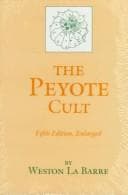
Indians of North America -- Religion; Indians of North America -- Rites and ceremonies; Peyotism
[5] Lumholtz, _Tarahumari Dances_; _Huichol Indians_; _Explorations en
Mexique_; _Symbolism of the Huichol_; _Unknown Mexico_; Kroeber, _The
Arapaho_, 398-410.
[6] Radin, _Sketch of the Peyote Cult_; _The Winnebago Tribe_, 388-426;
_Crashing Thunder_.
[7] Lowie, _Primitive Religion_, 200-204; Rouhier, _Monographie du
Peyotl_; Wagner, _Entwicklung und Verbreitung_; Petrullo, _The Diabolic
Root_.
[8] Smith, Mrs. Maurice G., _A Negro Peyote Cult_.
BOTANICAL AND PHYSIOLOGICAL ASPECTS OF PEYOTE
BOTANY
Numerous errors involved in the study of peyote, many of them still
widely current, make it advisable to identify our subject-matter clearly
at the very outset of our study. The plant peyote was first described by
Sahagún in 1560 as a narcotic cactus used ritually by the Chichimeca, the
root peiotl.[1] Jacinto de la Serna[2] in 1626 mentioned peyote, which
he distinguished from other intoxicants. The first properly botanical
description was made in 1638 by Hernandez,[3] the naturalist of Philip
II of Spain, under the rubric De Peyotl Zacatensi, seu radice molli et
lanuginosa. Ortega,[4] again, in 1754, mentioned peyote as used in a Cora
dance.
Since 1845 peyote has had numerous modern botanical classifications,
being listed variously as _Echinocactus williamsii_ Lem., _Anhalonium
williamsii_ Lem., _Mammillaria williamsii_ Coulter, _Echinocactus
lewinii_ Hennings, _Mammillaria lewinii_ Karsten, _Lophophora lewinii_
Thompson, etc. The commonest designation in the older ethnological
literature is _Anhalonium lewinii_ or _A. williamsii_. For a considerable
period it was thought that these last were two species—a point argued
both on botanical and ethnographic grounds—but the present classification
of peyote is as a single species, the unique member of its genus,
_Lophophora williamsii_.[5]
The peyote plant is a curious and unique little cactus. It has no spines
whatsoever, and ranges from the carrot-like to the turnip-like in shape
and size, without, however, any branches or leaves. The rounded top
surface, which alone appears above the soil (and which, cut off and
dried, becomes the peyote “button”), is divided radially by straight,
or slightly spiral, or sinuous furrows that in some specimens become so
complex as to lose the appearance of ribs altogether. These ribs bear
little tufts or pencils of matted grayish-white hair, not unlike artists’
fine camel’s-hair brushes. It is from these that the cactus takes both
its modern botanical designation, _Lophophora_ (“I bear crests”) and its
Aztec name _peyotl_ (from the resemblance to cocoon-silk). In the center
of the top there is a little spot of closely matted fuzz, from which the
ribs derive and grow; the flower, borne on a stalk, grows from here too,
the pinkish-whitish blossom growing into a rapidly maturing club-shaped
pinkish-reddish fruit.[6]
ETHNOBOTANY
Public-domain text, read in full here on John Shaqi.
Reviews
Reviews
No reviews yet
Be the first to share your thoughts on this work.
Join the Discussion
Join the discussion
Sign in to leave a comment or review.
Sign InorCreate an account