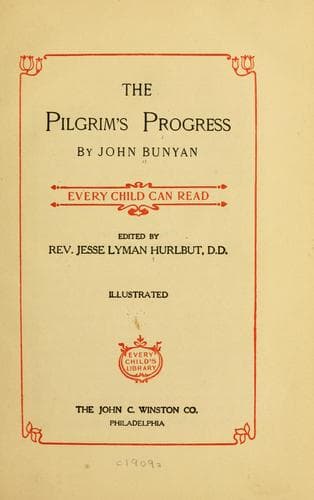
The Pilgrim's Progress by John Bunyan Every Child Can ReadBunyan, John
Religion
The Pilgrim's Progress by John Bunyan Every Child Can Read
Bunyan, John
Christian life -- Juvenile literature; Christian pilgrims and pilgrimages -- Juvenile literature
and terror to others, lest any should speak in their behalf, or join
themselves unto them. But Christian and Faithful behaved themselves yet
more wisely, and received the wrongs and shame that were cast upon them
with so much meekness and patience, that it won to their side (though
but few in comparison of the rest) several of the men in the fair. This
put the other party in yet a greater rage, insomuch that they resolved
upon the death of these two men. Wherefore they threatened that neither
cage nor irons should serve their turn, but that they should die for the
abuse they had done, and for deceiving the men of the fair.
[Sidenote: THE PILGRIMS IN STOCKS]
Then were they remanded to the cage again, until further order should be
taken with them. So they put them in, and made their feet fast in the
stocks.
Here, therefore, they called again to mind what they had heard from
their faithful friend Evangelist, and were more confirmed in their way
and sufferings, by what he told them would happen to them. They also now
comforted each other, that whose lot it was to suffer, even he should
have the best of it; therefore each man secretly wished he might have
that privilege. But, committing themselves to the all-wise disposal of
Him that ruleth all things, with much content they abode in the
condition in which they were, until they should be otherwise disposed
of.
[Sidenote: LORD HATE-GOOD]
Then a convenient time being appointed, they brought them forth to their
trial, in order to their being condemned. When the time was come, they
were brought before their enemies, and placed on trial. The judge's name
was Lord Hate-good: the charges against both were one and the same in
substance, though somewhat varying in form; the contents whereof were
this: "That they were enemies to and disturbers of their trade; that
they had made riots and divisions in the town, and had won a party to
their own most dangerous opinions, in contempt of the law of their
prince."
Then Faithful began to answer, that he had only set himself against that
which had set itself against Him that is higher than the highest. "And,"
said he, "as for disturbances, I make none, being myself a man of peace;
the parties that were won to us, were won by beholding our truth and
innocence, and they are only turned from the worse to the better. And,
as to the king you talk of, since he is Beelzebub, the enemy of our
Lord, I defy him and all his angels."
[Sidenote: THE PILGRIMS ON TRIAL]
Then it was made known that they that had aught to say for their lord
the king against the prisoner at the bar should forthwith appear and
give in their evidence. So there came in three witnesses; to wit, Envy,
Superstition, and Pickthank. They were then asked if they knew the
prisoner at the bar, and what they had to say for their lord the king
against him.
Public-domain text, read in full here on John Shaqi.
Reviews
Reviews
No reviews yet
Be the first to share your thoughts on this work.
Join the Discussion
Join the discussion
Sign in to leave a comment or review.
Sign InorCreate an account