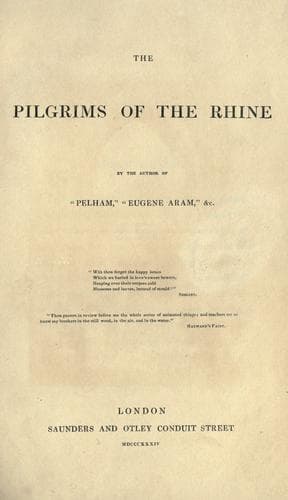
The Pilgrims of the RhineLytton, Edward Bulwer Lytton, Baron
Science
The Pilgrims of the Rhine
Lytton, Edward Bulwer Lytton, Baron
Fairies -- Fiction; Fantasy fiction; Rhine River Valley -- Fiction
“I myself am but just from Palestine, brave chief and noble maiden. I
saw the gallant knight of Liebenstein at the right hand of the imperial
Conrad. And he, ladye, was the only knight whom admiration shone upon
without envy, its shadow. Who then,” continued the minstrel, once more
striking his harp, “who then would remain inglorious in the hall? Shall
not the banners of his sires reproach him as they wave; and shall not
every voice from Palestine strike shame into his soul?”
“Right!” cried Otho, suddenly, and flinging himself at the feet of his
father. “Thou hearest what my brother has done, and thine aged eyes weep
tears of joy. Shall I only dishonour thine old age with a rusted sword?
No! grant me, like my brother, to go forth with the heroes of the
Cross!”
“Noble youth,” cried the harper, “therein speaks the soul of Sir
Warbeck; hear him, sir, knight,--hear the noble youth.”
“Heaven cries aloud in his voice,” said the Templar, solemnly.
“My son, I cannot chide thine ardour,” said the old chief, raising him
with trembling hands; “but Leoline, thy betrothed?”
Pale as a statue, with ears that doubted their sense as they drank in
the cruel words of her lover, stood the orphan. She did not speak, she
scarcely breathed; she sank into her seat, and gazed upon the ground,
till, at the speech of the chief both maiden pride and maiden tenderness
restored her consciousness, and she said,--
“_I_, uncle! Shall _I_ bid Otho stay when his wishes bid him depart?”
“He will return to thee, noble ladye, covered with glory,” said the
harper: but Otho said no more. The touching voice of Leoline went to
his soul; he resumed his seat in silence; and Leoline, going up to
him, whispered gently, “Act as though I were not;” and left the hall to
commune with her heart and to weep alone.
“I can wed her before I go,” said Otho, suddenly, as he sat that night
in the Templar’s chamber.
“Why, that is true! and leave thy bride in the first week,--a hard
trial!”
“Better than incur the chance of never calling her mine. Dear, kind,
beloved Leoline!”
“Assuredly, she deserves all from thee; and, indeed, it is no small
sacrifice, at thy years and with thy mien, to renounce forever all
interest among the noble maidens thou wilt visit. Ah, from the galleries
of Constantinople what eyes will look down on thee, and what ears,
learning that thou art Otho the bridegroom, will turn away, caring for
thee no more! A bridegroom without a bride! Nay, man, much as the Cross
wants warriors, I am enough thy friend to tell thee, if thou weddest, to
stay peaceably at home, and forget in the chase the labours of war, from
which thou wouldst strip the ambition of love.”
“I would I knew what were best,” said Otho, irresolutely. “My
brother--ha, shall he forever excel me? But Leoline, how will she
grieve,--she who left him for me!”
Public-domain text, read in full here on John Shaqi.
Reviews
Reviews
No reviews yet
Be the first to share your thoughts on this work.
Elsewhere in the archive
Join the Discussion
Join the discussion
Sign in to leave a comment or review.
Sign InorCreate an account