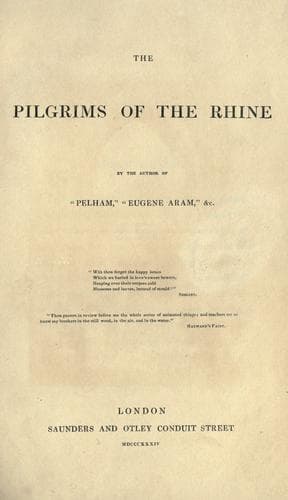
The Pilgrims of the RhineLytton, Edward Bulwer Lytton, Baron
Science
The Pilgrims of the Rhine
Lytton, Edward Bulwer Lytton, Baron
Fairies -- Fiction; Fantasy fiction; Rhine River Valley -- Fiction
“See,” said Vane, pointing to two peasants who were conversing near
them on the matters of their little trade, utterly unconscious of the
associations of the spot, “see, after all that is said and done about
human greatness, it is always the greatness of the few. Ages pass, and
leave the poor herd, the mass of men, eternally the same,--hewers of
wood and drawers of water. The pomp of princes has its ebb and flow, but
the peasant sells his fruit as gayly to the stranger on the ruins as to
the emperor in the palace.”
“Will it be always so?” said the student.
“Let us hope not, for the sake of permanence in glory,” said Trevylyan.
“Had _a people_ built yonder palace, its splendour would never have
passed away.”
Vane shrugged his shoulders, and Du-----e took snuff.
But all the impressions produced by the castle at a distance are as
nothing when you stand within its vast area and behold the architecture
of all ages blended into one mighty ruin! The rich hues of the masonry,
the sweeping facades--every description of building which man ever
framed for war or for luxury--is here; all having only the common
character,--RUIN. The feudal rampart, the yawning fosse, the rude tower,
the splendid arch, the strength of a fortress, the magnificence of a
palace,--all united, strike upon the soul like the history of a fallen
empire in all its epochs.
“There is one singular habitant of these ruins,” said the student,--“a
solitary painter, who has dwelt here some twenty years, companioned only
by his Art. No other apartment but that which he tenants is occupied by
a human being.”
“What a poetical existence!” cried Gertrude, enchanted with a solitude
so full of associations.
“Perhaps so,” said the cruel Vane, ever anxious to dispel an illusion,
“but more probably custom has deadened to him all that overpowers
ourselves with awe; and he may tread among these ruins rather seeking to
pick up some rude morsel of antiquity, than feeding his imagination with
the dim traditions that invest them with so august a poetry.”
“Monsieur’s conjecture has something of the truth in it,” said the
German; “but then the painter is a Frenchman.”
There is a sense of fatality in the singular mournfulness and majesty
which belong to the ruins of Heidelberg, contrasting the vastness of the
strength with the utterness of the ruin. It has been twice struck with
lightning, and is the wreck of the elements, not of man; during the
great siege it sustained, the lightning is supposed to have struck the
powder magazine by accident.
What a scene for some great imaginative work! What a mocking
interference of the wrath of nature in the puny contests of men! One
stroke of “the red right arm” above us, crushing the triumph of ages,
and laughing to scorn the power of the beleaguers and the valour of the
besieged!
They passed the whole day among these stupendous ruins, and felt, when
they descended to their inn, as if they had left the caverns of some
mighty tomb.
Public-domain text, read in full here on John Shaqi.
Reviews
Reviews
No reviews yet
Be the first to share your thoughts on this work.
Elsewhere in the archive
Join the Discussion
Join the discussion
Sign in to leave a comment or review.
Sign InorCreate an account