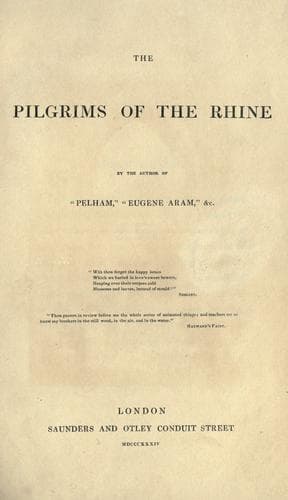
The Pilgrims of the RhineLytton, Edward Bulwer Lytton, Baron
Science
The Pilgrims of the Rhine
Lytton, Edward Bulwer Lytton, Baron
Fairies -- Fiction; Fantasy fiction; Rhine River Valley -- Fiction
WITH the younger class of my readers this work has had the good fortune
to find especial favour; perhaps because it is in itself a collection of
the thoughts and sentiments that constitute the Romance of youth. It has
little to do with the positive truths of our actual life, and does not
pretend to deal with the larger passions and more stirring interests
of our kind. It is but an episode out of the graver epic of human
destinies. It requires no explanation of its purpose, and no analysis of
its story; the one is evident, the other simple,--the first seeks but
to illustrate visible nature through the poetry of the affections; the
other is but the narrative of the most real of mortal sorrows, which the
Author attempts to take out of the region of pain by various accessories
from the Ideal. The connecting tale itself is but the string that binds
into a garland the wild-flowers cast upon a grave.
The descriptions of the Rhine have been considered by Germans
sufficiently faithful to render this tribute to their land and
their legends one of the popular guide-books along the course it
illustrates,--especially to such tourists as wish not only to take
in with the eye the inventory of the river, but to seize the peculiar
spirit which invests the wave and the bank with a beauty that can only
be made visible by reflection. He little comprehends the true charm of
the Rhine who gazes on the vines on the hill-tops without a thought of
the imaginary world with which their recesses have been peopled by the
graceful credulity of old; who surveys the steep ruins that overshadow
the water, untouched by one lesson from the pensive morality of Time.
Everywhere around us is the evidence of perished opinions and
departed races; everywhere around us, also, the rejoicing fertility of
unconquerable Nature, and the calm progress of Man himself through the
infinite cycles of decay. He who would judge adequately of a landscape
must regard it not only with the painter’s eye, but with the poet’s.
The feelings which the sight of any scene in Nature conveys to the
mind--more especially of any scene on which history or fiction has left
its trace--must depend upon our sympathy with those associations which
make up what may be called the spiritual character of the spot. If
indifferent to those associations, we should see only hedgerows and
ploughed land in the battle-field of Bannockburn; and the traveller
would but look on a dreary waste, whether he stood amidst the piles of
the Druid on Salisbury plain, or trod his bewildered way over the broad
expanse on which the Chaldaean first learned to number the stars.
Public-domain text, read in full here on John Shaqi.
Reviews
Reviews
No reviews yet
Be the first to share your thoughts on this work.
Join the Discussion
Join the discussion
Sign in to leave a comment or review.
Sign InorCreate an account