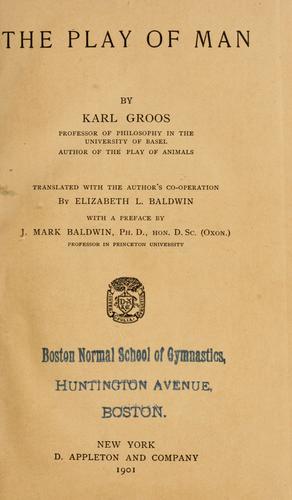
Older children have innumerable tricks of this kind. A sort of game
is to strike on a table with a spoon or on the floor with a card and
repeat the formula “He can do little who can’t do this, this,” and
pass the stick or spoon to the next neighbour with the left hand. The
uninitiated who attempt to do this usually pass it with the right hand
and are much puzzled when told that they are wrong. There is much of
this element, too, in the games of magic which children are so fond
of. For examples of it among adults it is only necessary to turn again
to the old jokes of students. In a university town a merchant, Karl
Klingel, was roused in the middle of the night by a ring at the bell.
The visitor was a student named Karl, who pretended to think that the
name on the sign was a signal for him. “Mystification,” says Goethe in
Wahrheit und Dichtung, “is and ever will be amusement for idle people
who are more or less intelligent. Indolent mischievousness, selfish
enjoyment of doing some damage is a resource to those who are without
occupation or any wholesome external interests. No age is entirely free
from such proclivities.” Moreover, one whole day in every year is given
over to this jesting deception. The civilized world over the first of
April is fool’s day. Wagner thinks that this custom arose from the
change of the new year from the vernal equinox to January 1st, thus
giving to the customary exchange of New Year’s gifts the character of
jests, and to those who should forget the change of time the appearance
of fools. So they are called Aprilnarren, poisson d’Avril, April fools,
and in Scotland gowks.[462]
Public-domain text, read in full here on John Shaqi.
Reviews
Reviews
No reviews yet
Be the first to share your thoughts on this work.
Elsewhere in the archive
Join the Discussion
Join the discussion
Sign in to leave a comment or review.
Sign InorCreate an account