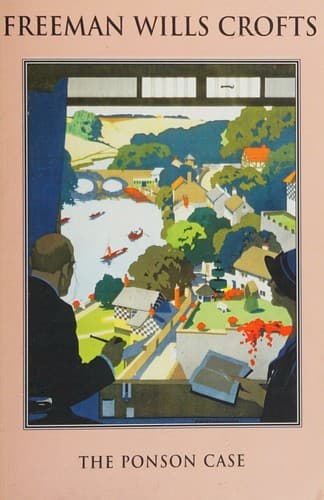
Detective and mystery stories; Murder -- Investigation -- Fiction; Police -- England -- Fiction
‘You know the circumstances, of course, of Sir William’s death?
Everything seemed to point to an accident. Well, we are not so sure
about it. I am sorry to say there is a suspicion of foul play.’
The lawyer looked up sharply.
‘Foul play?’ he repeated. ‘Good Lord, I hope not!’
‘I’m afraid, sir, there is little doubt of it. The medical evidence
points in that direction at any rate.’
Mr Arbuthnot, it seemed, had been more than merely legal adviser to
the deceased gentleman. They had been close personal friends, and the
solicitor was profoundly shocked by Tanner’s news. It had the effect
of eliciting his warm sympathy with the Inspector’s efforts, and he
hastened to assure the latter of his cordial help and co-operation.
‘Tell me now,’ he concluded, ‘what I can do for you.’
Tanner thanked him, and went on:
‘I want you, sir, if you will be so kind, to tell me what you can
about Sir William—his history, his family, his money affairs, and so
on. May I ask first if you act for the remainder of the family?’
‘For Lady Ponson only.’
Tanner bowed, and Mr Arbuthnot, going to a press, took out a despatch
box labelled ‘Sir William Ponson,’ from which he removed some papers.
Consulting these from time to time for dates and names, he told the
Inspector the following history:
Sir William’s wealth and position, it appeared, had come from very
small beginnings. His father and mother, Mr Arbuthnot believed, had
died while he was quite young, leaving him and his brother John alone
in the world. He had got work as an office boy in a small iron-foundry
at Gateshead, where, owing to his extraordinary industry and energy,
he had worked himself up to the position of manager at the
comparatively early age of twenty-nine. Under his guidance the
concern, which for years had been moribund, had prospered amazingly,
and thirteen years later he was taken into partnership. This
consummation had been reached only six years when the former owner
died, leaving him in sole control. William then sought out his brother
John, who also had prospered, having worked himself up to the
chief-engineership of one of the large Cunarders. William took John
into partnership with the result that, the mechanical side of the work
being reorganised, the firm advanced still more rapidly, the two
brothers becoming wealthy men. William next turned his attention to
civic affairs. He was elected a member of Newcastle Corporation, and
during his time of office as mayor, he received his knighthood on the
occasion of a royal visit to the town. When Sir William was some sixty
years old his brother John died suddenly, and he, not caring to work
on alone, sold his interest in the firm, and moving south, purchased
Luce Manor, where he devoted his still abundant energies to
experiments in the application of machinery to farming.
Public-domain text, read in full here on John Shaqi.
Reviews
Reviews
No reviews yet
Be the first to share your thoughts on this work.
Join the Discussion
Join the discussion
Sign in to leave a comment or review.
Sign InorCreate an account