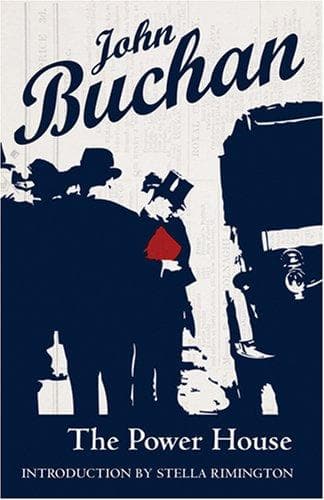
Detective and mystery stories; Legal stories; Leithen, Edward (Fictitious character) -- Fiction
But on what ground? I had no notion as to the blackmailable thing
that might lurk in Charles's past, and the guesses which flitted
through my brain were too fantastic to consider seriously. After
all, I had only the flimsiest basis for conjecture. Pavia and
Pitt-Heron were friends; Tommy had gone off in quest of Pitt-Heron;
Pavia's butler had broken the law of the land in order, for some
reason or other, to see the departure of the train by which Tommy had
travelled. I remember laughing at myself for my suspicions, and
reflecting that, if Tommy could see into my head, he would turn a
deaf ear in the future to my complaints of his lack of balance.
But the thing stuck in my mind, and I called again that week on Mrs.
Pitt-Heron. She had had no word from her husband, and only a bare
line from Tommy, giving his Moscow address. Poor child, it was a
wretched business for her. She had to keep a smiling face to the
world, invent credible tales to account for her husband's absence,
and all the while anxiety and dread were gnawing at her heart. I
asked her if she had ever met a Mr. Pavia, but the name was unknown
to her. She knew nothing of Charles's business dealings, but at my
request she interviewed his bankers, and I heard from her next day
that his affairs were in perfect order. It was no financial crisis
which had precipitated him abroad.
A few days later I stumbled by the merest accident upon what sailors
call a "cross-bearing." At the time I used to "devil" a little for
the Solicitor-General, and "note" cases sent to him from the
different Government offices. It was thankless work, but it was
supposed to be good for an ambitious lawyer. By this prosaic channel
I received the first hint of another of Charles's friends.
I had sent me one day the papers dealing with the arrest of a German
spy at Plymouth, for at the time there was a sort of epidemic of
roving Teutons who got themselves into compromising situations, and
gravely troubled the souls of the Admiralty and the War-Office. This
case was distinguished from the common ruck by the higher social
standing of the accused. Generally the spy is a photographer or
bagman who attempts to win the bibulous confidence of minor
officials. But this specimen was no less than a professor of a
famous German University, a man of excellent manners, wide culture,
and attractive presence, who had dined with Port officers and danced
with Admirals' daughters.
Public-domain text, read in full here on John Shaqi.
Reviews
Reviews
No reviews yet
Be the first to share your thoughts on this work.
Join the Discussion
Join the discussion
Sign in to leave a comment or review.
Sign InorCreate an account