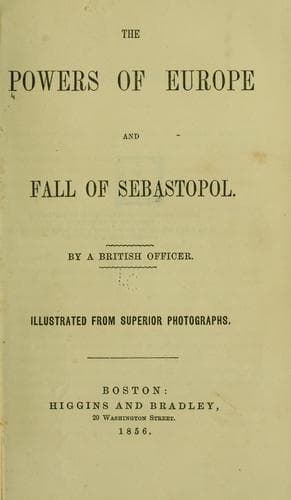
The Powers of Europe and Fall of SebastopolA British officer
History
The Powers of Europe and Fall of Sebastopol
A British officer
Crimean War, 1853-1856; Europe -- History -- 1789-1900
had fallen in the city, and fifty-four thousand of the inhabitants
had perished. Six thousand only had fallen in combat, while
forty-eight thousand had been the prey of the pestilence. After the
town had capitulated, but twelve thousand were found able to bear
arms, and they looked more like spectres issuing from the tomb than
like living warriors.
“Saragossa was taken; but what a capture! As Lannes rode through
the streets at the head of his victorious army, he looked only on a
heap of ruins, while six thousand unburied corpses lay in his path.
Sixteen thousand lay sick, while on the living famine had written
more dreadful characters than death had traced on the fallen. Infants
lay on the breasts of their dead mothers, striving in vain to draw
life from bosoms that would never throb again. Attenuated forms,
with haggard faces and sunken eyes and cheeks, wandered around
among the dead to search for their friends; corpses, bloated with
famine, lay stretched across the threshold of their dwellings, and
strong-limbed men went staggering over the pavements, weak from want
of food, or struck with the pestilence. Woe was in every street,
and the silence in the dwellings was more eloquent than the loudest
cries and groans. Death and famine and the pestilence had been there,
in every variety of form and suffering. But the divine form of
Liberty had been there too, walking amid those mountains of corpses
and ruins of homes, shedding her light through the subterranean
apartments of the wretched, and, with her cheering voice, animating
the thrice-conquered, yet still unconquered, to another effort,
and blessing the dying as they prayed for their beloved city. But
she was at last compelled to take her departure, and the bravest
city of modern Europe sunk in bondage. Still her example lives, and
shall live to the end of time, nerving the patriot to strike and
suffer for his home and freedom, and teaching man everywhere how to
die in defending the right. A wreath of glory surrounds the brow of
Saragossa, fadeless as the memory of her brave defenders. Before
their achievements,--the moral grandeur of their firm struggle,
and the depth and intensity of their sufferings,--the bravery and
perseverance of the French sink into forgetfulness. Yet theirs was no
ordinary task, and it was by no ordinary means that it was executed.”
Public-domain text, read in full here on John Shaqi.
Reviews
Reviews
No reviews yet
Be the first to share your thoughts on this work.
Elsewhere in the archive
Join the Discussion
Join the discussion
Sign in to leave a comment or review.
Sign InorCreate an account