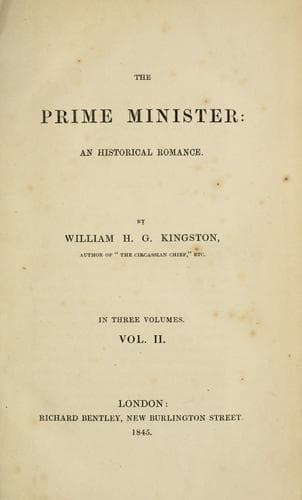
Portugal -- History -- Joseph, 1750-1777 -- Fiction
Theresa answered with energy, "Oh, Father! but it surely cannot be
justifiable to deceive my husband, to barter his honour, and to betray
the secrets drawn from my confiding sovereign in a moment of affection."
"The honour of a husband you do not love, and whose affection for you
you have found but of short endurance, is but of little worth," answered
the Father. "Besides, by acting as I would have you do, you perform a
far greater service to him and his family than in preserving what he
does not value. You treat him far better than he deserves. Let not
that thought trouble you. With regard to winning the secrets of your
sovereign, you injure him in no possible way; it is through him alone we
may hope to arrive at many of the secrets of the Minister; for to no one
else are they confided; and against our enemy alone is a blow
meditated."
Donna Theresa had no further excuse to make for her refusal; yet her
heart (for that was not quite convinced by the cunning arguments of
sophistry) told her that she would be acting a treacherous and sinful
part in following her confessor's counsels. But then again, her
ambition urged her on,--and, more than all, she loved! A moth may not
play round the flame without scorching its wings; and a woman can seldom
tamper with the affections of another without injuring her own. From
the moment that she felt she loved the weak monarch, she was no longer
able to act the treacherous part she had before been taught to play.
She grew cold and distant, for she could not trust herself; and, while
her royal lover fancied himself further from his object, he was on the
very verge of attaining it. Now, then, her scruples on one score were
banished; for she had no further reason to hesitate, when her only
counsellor assured her she was committing no crime; but it was not in
her nature to be deceitful, and she began to doubt how far she was
justified in gaining the confidence of the King in order to betray it.
Before she loved, this thought had never occurred to her. Her aim, from
the first, had been to gain power; and vanity had led her on from step
to step.
It is extraordinary in what different lights we mortals view the same
objects under various circumstances. What at one time appears the thing
of all others the most desirable to be gained, and for which we would
sacrifice our present happiness, and, perhaps, all those dear to us, we
the next instant look upon as worthless. What we once thought a heinous
crime, we too soon, alas! learn to consider as a slight failing, though
far less often do we shudder at crimes which we before committed with
untroubled consciences.
Public-domain text, read in full here on John Shaqi.
Reviews
Reviews
No reviews yet
Be the first to share your thoughts on this work.
Elsewhere in the archive
Join the Discussion
Join the discussion
Sign in to leave a comment or review.
Sign InorCreate an account