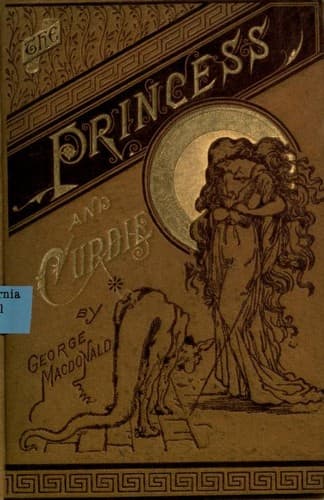
Children's stories; Fairy tales; Fantasy literature
Having watched every turn to the very last, he still knew quite well in
what direction he must go to find it, so he left the stair and went
down a passage that led, if not exactly toward it, yet nearer it. This
passage was rather dark, for it was very long, with only one window at
the end, and although there were doors on both sides of it, they were
all shut. At the distant window glimmered the chill east, with a few
feeble stars in it, and its like was dreary and old, growing brown, and
looking as if it were thinking about the day that was just gone.
Presently he turned into another passage, which also had a window at
the end of it; and in at that window shone all that was left of the
sunset, just a few ashes, with here and there a little touch of warmth:
it was nearly as sad as the east, only there was one difference--it was
very plainly thinking of tomorrow.
But at present Curdie had nothing to do with today or tomorrow; his
business was with the bird, and the tower where dwelt the grand old
princess to whom it belonged. So he kept on his way, still eastward,
and came to yet another passage, which brought him to a door. He was
afraid to open it without first knocking. He knocked, but heard no
answer. He was answered nevertheless; for the door gently opened, and
there was a narrow stair--and so steep that, big lad as he was, he,
too, like the Princess Irene before him, found his hands needful for
the climbing. And it was a long climb, but he reached the top at
last--a little landing, with a door in front and one on each side.
Which should he knock at?
As he hesitated, he heard the noise of a spinning wheel. He knew it at
once, because his mother's spinning wheel had been his governess long
ago, and still taught him things. It was the spinning wheel that first
taught him to make verses, and to sing, and to think whether all was
right inside him; or at least it had helped him in all these things.
Hence it was no wonder he should know a spinning wheel when he heard it
sing--even although as the bird of paradise to other birds was the song
of that wheel to the song of his mother's.
He stood listening, so entranced that he forgot to knock, and the wheel
went on and on, spinning in his brain songs and tales and rhymes, till
he was almost asleep as well as dreaming, for sleep does not always
come first. But suddenly came the thought of the poor bird, which had
been lying motionless in his hand all the time, and that woke him up,
and at once he knocked.
'Come in, Curdie,' said a voice.
Public-domain text, read in full here on John Shaqi.
Reviews
Reviews
No reviews yet
Be the first to share your thoughts on this work.
Join the Discussion
Join the discussion
Sign in to leave a comment or review.
Sign InorCreate an account