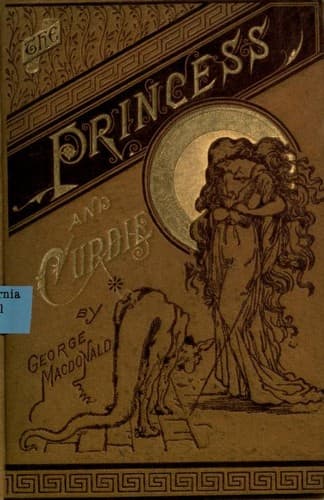
Children's stories; Fairy tales; Fantasy literature
A gloom fell upon the mountain and the miners when she was gone, and
Curdie did not whistle for a whole week. As for his verses, there was
no occasion to make any now. He had made them only to drive away the
goblins, and they were all gone--a good riddance--only the princess was
gone too! He would rather have had things as they were, except for the
princess's sake. But whoever is diligent will soon be cheerful, and
though the miners missed the household of the castle, they yet managed
to get on without them. Peter and his wife, however, were troubled with
the fancy that they had stood in the way of their boy's good fortune.
It would have been such a fine thing for him and them, too, they
thought, if he had ridden with the good king's train. How beautiful he
looked, they said, when he rode the king's own horse through the river
that the goblins had sent out of the hill! He might soon have been a
captain, they did believe! The good, kind people did not reflect that
the road to the next duty is the only straight one, or that, for their
fancied good, we should never wish our children or friends to do what
we would not do ourselves if we were in their position. We must accept
righteous sacrifices as well as make them.
CHAPTER 2
The White Pigeon
When in the winter they had had their supper and sat about the fire, or
when in the summer they lay on the border of the rock-margined stream
that ran through their little meadow close by the door of their
cottage, issuing from the far-up whiteness often folded in clouds,
Curdie's mother would not seldom lead the conversation to one peculiar
personage said and believed to have been much concerned in the late
issue of events.
That personage was the great-great-grandmother of the princess, of whom
the princess had often talked, but whom neither Curdie nor his mother
had ever seen. Curdie could indeed remember, although already it
looked more like a dream than he could account for if it had really
taken place, how the princess had once led him up many stairs to what
she called a beautiful room in the top of the tower, where she went
through all the--what should he call it?--the behaviour of presenting
him to her grandmother, talking now to her and now to him, while all
the time he saw nothing but a bare garret, a heap of musty straw, a
sunbeam, and a withered apple. Lady, he would have declared before the
king himself, young or old, there was none, except the princess
herself, who was certainly vexed that he could not see what she at
least believed she saw.
Public-domain text, read in full here on John Shaqi.
Reviews
Reviews
No reviews yet
Be the first to share your thoughts on this work.
Join the Discussion
Join the discussion
Sign in to leave a comment or review.
Sign InorCreate an account