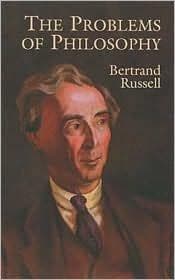
Knowledge, Theory of; Metaphysics; Philosophy -- Introductions
It has been argued that we have reason to know that the future will
resemble the past, because what was the future has constantly become the
past, and has always been found to resemble the past, so that we really
have experience of the future, namely of times which were formerly
future, which we may call past futures. But such an argument really begs
the very question at issue. We have experience of past futures, but not
of future futures, and the question is: Will future futures resemble
past futures? This question is not to be answered by an argument which
starts from past futures alone. We have therefore still to seek for some
principle which shall enable us to know that the future will follow the
same laws as the past.
The reference to the future in this question is not essential. The same
question arises when we apply the laws that work in our experience to
past things of which we have no experience--as, for example, in geology,
or in theories as to the origin of the Solar System. The question we
really have to ask is: 'When two things have been found to be often
associated, and no instance is known of the one occurring without the
other, does the occurrence of one of the two, in a fresh instance, give
any good ground for expecting the other?' On our answer to this question
must depend the validity of the whole of our expectations as to the
future, the whole of the results obtained by induction, and in fact
practically all the beliefs upon which our daily life is based.
It must be conceded, to begin with, that the fact that two things have
been found often together and never apart does not, by itself, suffice
to _prove_ demonstratively that they will be found together in the next
case we examine. The most we can hope is that the oftener things are
found together, the more probable it becomes that they will be found
together another time, and that, if they have been found together often
enough, the probability will amount _almost_ to certainty. It can
never quite reach certainty, because we know that in spite of frequent
repetitions there sometimes is a failure at the last, as in the case
of the chicken whose neck is wrung. Thus probability is all we ought to
seek.
It might be urged, as against the view we are advocating, that we
know all natural phenomena to be subject to the reign of law, and that
sometimes, on the basis of observation, we can see that only one law
can possibly fit the facts of the case. Now to this view there are two
answers. The first is that, even if _some_ law which has no exceptions
applies to our case, we can never, in practice, be sure that we have
discovered that law and not one to which there are exceptions. The
second is that the reign of law would seem to be itself only probable,
and that our belief that it will hold in the future, or in unexamined
cases in the past, is itself based upon the very principle we are
examining.
Public-domain text, read in full here on John Shaqi.
Reviews
Reviews
No reviews yet
Be the first to share your thoughts on this work.
Join the Discussion
Join the discussion
Sign in to leave a comment or review.
Sign InorCreate an account