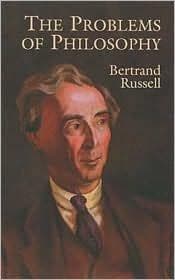
Knowledge, Theory of; Metaphysics; Philosophy -- Introductions
The fact is that, in simple mathematical judgements such as 'two and two
are four', and also in many judgements of logic, we can know the general
proposition without inferring it from instances, although some instance
is usually necessary to make clear to us what the general proposition
means. This is why there is real utility in the process of _deduction_,
which goes from the general to the general, or from the general to the
particular, as well as in the process of _induction_, which goes from
the particular to the particular, or from the particular to the general.
It is an old debate among philosophers whether deduction ever gives
_new_ knowledge. We can now see that in certain cases, at least, it does
do so. If we already know that two and two always make four, and we
know that Brown and Jones are two, and so are Robinson and Smith, we can
deduce that Brown and Jones and Robinson and Smith are four. This is
new knowledge, not contained in our premisses, because the general
proposition, 'two and two are four', never told us there were such
people as Brown and Jones and Robinson and Smith, and the particular
premisses do not tell us that there were four of them, whereas the
particular proposition deduced does tell us both these things.
But the newness of the knowledge is much less certain if we take the
stock instance of deduction that is always given in books on logic,
namely, 'All men are mortal; Socrates is a man, therefore Socrates is
mortal.' In this case, what we really know beyond reasonable doubt is
that certain men, A, B, C, were mortal, since, in fact, they have died.
If Socrates is one of these men, it is foolish to go the roundabout way
through 'all men are mortal' to arrive at the conclusion that _probably_
Socrates is mortal. If Socrates is not one of the men on whom our
induction is based, we shall still do better to argue straight from our
A, B, C, to Socrates, than to go round by the general proposition, 'all
men are mortal'. For the probability that Socrates is mortal is greater,
on our data, than the probability that all men are mortal. (This is
obvious, because if all men are mortal, so is Socrates; but if Socrates
is mortal, it does not follow that all men are mortal.) Hence we shall
reach the conclusion that Socrates is mortal with a greater approach to
certainty if we make our argument purely inductive than if we go by way
of 'all men are mortal' and then use deduction.
This illustrates the difference between general propositions known _a
priori_ such as 'two and two are four', and empirical generalizations
such as 'all men are mortal'. In regard to the former, deduction is the
right mode of argument, whereas in regard to the latter, induction is
always theoretically preferable, and warrants a greater confidence in
the truth of our conclusion, because all empirical generalizations are
more uncertain than the instances of them.
Public-domain text, read in full here on John Shaqi.
Reviews
Reviews
No reviews yet
Be the first to share your thoughts on this work.
Join the Discussion
Join the discussion
Sign in to leave a comment or review.
Sign InorCreate an account