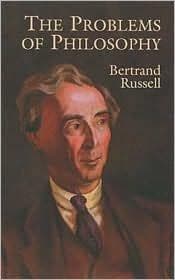
Knowledge, Theory of; Metaphysics; Philosophy -- Introductions
We are now in a position to understand what it is that distinguishes a
true judgement from a false one. For this purpose we will adopt certain
definitions. In every act of judgement there is a mind which judges, and
there are terms concerning which it judges. We will call the mind the
_subject_ in the judgement, and the remaining terms the _objects_. Thus,
when Othello judges that Desdemona loves Cassio, Othello is the subject,
while the objects are Desdemona and loving and Cassio. The subject and
the objects together are called the _constituents_ of the judgement.
It will be observed that the relation of judging has what is called a
'sense' or 'direction'. We may say, metaphorically, that it puts its
objects in a certain _order_, which we may indicate by means of the
order of the words in the sentence. (In an inflected language, the same
thing will be indicated by inflections, e.g. by the difference between
nominative and accusative.) Othello's judgement that Cassio loves
Desdemona differs from his judgement that Desdemona loves Cassio, in
spite of the fact that it consists of the same constituents, because the
relation of judging places the constituents in a different order in the
two cases. Similarly, if Cassio judges that Desdemona loves Othello,
the constituents of the judgement are still the same, but their order is
different. This property of having a 'sense' or 'direction' is one which
the relation of judging shares with all other relations. The 'sense'
of relations is the ultimate source of order and series and a host of
mathematical concepts; but we need not concern ourselves further with
this aspect.
Public-domain text, read in full here on John Shaqi.
Reviews
Reviews
No reviews yet
Be the first to share your thoughts on this work.
Elsewhere in the archive
Join the Discussion
Join the discussion
Sign in to leave a comment or review.
Sign InorCreate an account