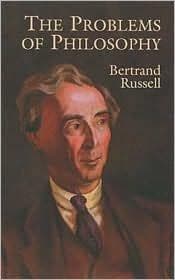
Knowledge, Theory of; Metaphysics; Philosophy -- Introductions
At first sight we might imagine that knowledge could be defined as 'true
belief'. When what we believe is true, it might be supposed that we had
achieved a knowledge of what we believe. But this would not accord
with the way in which the word is commonly used. To take a very trivial
instance: If a man believes that the late Prime Minister's last name
began with a B, he believes what is true, since the late Prime Minister
was Sir Henry Campbell Bannerman. But if he believes that Mr. Balfour
was the late Prime Minister, he will still believe that the late Prime
Minister's last name began with a B, yet this belief, though true,
would not be thought to constitute knowledge. If a newspaper, by an
intelligent anticipation, announces the result of a battle before any
telegram giving the result has been received, it may by good fortune
announce what afterwards turns out to be the right result, and it may
produce belief in some of its less experienced readers. But in spite of
the truth of their belief, they cannot be said to have knowledge. Thus
it is clear that a true belief is not knowledge when it is deduced from
a false belief.
In like manner, a true belief cannot be called knowledge when it is
deduced by a fallacious process of reasoning, even if the premisses from
which it is deduced are true. If I know that all Greeks are men and that
Socrates was a man, and I infer that Socrates was a Greek, I cannot be
said to _know_ that Socrates was a Greek, because, although my premisses
and my conclusion are true, the conclusion does not follow from the
premisses.
But are we to say that nothing is knowledge except what is validly
deduced from true premisses? Obviously we cannot say this. Such a
definition is at once too wide and too narrow. In the first place, it is
too wide, because it is not enough that our premisses should be _true_,
they must also be _known_. The man who believes that Mr. Balfour was the
late Prime Minister may proceed to draw valid deductions from the true
premiss that the late Prime Minister's name began with a B, but he
cannot be said to _know_ the conclusions reached by these deductions.
Thus we shall have to amend our definition by saying that knowledge
is what is validly deduced from _known_ premisses. This, however, is a
circular definition: it assumes that we already know what is meant
by 'known premisses'. It can, therefore, at best define one sort
of knowledge, the sort we call derivative, as opposed to intuitive
knowledge. We may say: '_Derivative_ knowledge is what is validly
deduced from premisses known intuitively'. In this statement there is
no formal defect, but it leaves the definition of _intuitive_ knowledge
still to seek.
Public-domain text, read in full here on John Shaqi.
Reviews
Reviews
No reviews yet
Be the first to share your thoughts on this work.
Elsewhere in the archive
Join the Discussion
Join the discussion
Sign in to leave a comment or review.
Sign InorCreate an account