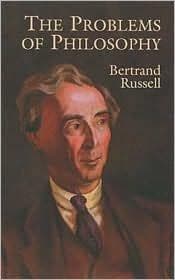
Knowledge, Theory of; Metaphysics; Philosophy -- Introductions
Thus although truth and falsehood are properties of beliefs, yet they
are in a sense extrinsic properties, for the condition of the truth of
a belief is something not involving beliefs, or (in general) any mind
at all, but only the _objects_ of the belief. A mind, which believes,
believes truly when there is a _corresponding_ complex not involving the
mind, but only its objects. This correspondence ensures truth, and its
absence entails falsehood. Hence we account simultaneously for the two
facts that beliefs (a) depend on minds for their _existence_, (b) do not
depend on minds for their _truth_.
We may restate our theory as follows: If we take such a belief as
'Othello believes that Desdemona loves Cassio', we will call Desdemona
and Cassio the _object-terms_, and loving the _object-relation_. If
there is a complex unity 'Desdemona's love for Cassio', consisting of
the object-terms related by the object-relation in the same order as
they have in the belief, then this complex unity is called the _fact
corresponding to the belief_. Thus a belief is true when there is a
corresponding fact, and is false when there is no corresponding fact.
It will be seen that minds do not _create_ truth or falsehood. They
create beliefs, but when once the beliefs are created, the mind cannot
make them true or false, except in the special case where they concern
future things which are within the power of the person believing, such
as catching trains. What makes a belief true is a _fact_, and this fact
does not (except in exceptional cases) in any way involve the mind of
the person who has the belief.
Having now decided what we _mean_ by truth and falsehood, we have next
to consider what ways there are of knowing whether this or that belief
is true or false. This consideration will occupy the next chapter.
CHAPTER XIII. KNOWLEDGE, ERROR, AND PROBABLE OPINION
The question as to what we mean by truth and falsehood, which we
considered in the preceding chapter, is of much less interest than the
question as to how we can know what is true and what is false. This
question will occupy us in the present chapter. There can be no doubt
that _some_ of our beliefs are erroneous; thus we are led to inquire
what certainty we can ever have that such and such a belief is not
erroneous. In other words, can we ever _know_ anything at all, or do we
merely sometimes by good luck believe what is true? Before we can attack
this question, we must, however, first decide what we mean by 'knowing',
and this question is not so easy as might be supposed.
Public-domain text, read in full here on John Shaqi.
Reviews
Reviews
No reviews yet
Be the first to share your thoughts on this work.
Elsewhere in the archive
Join the Discussion
Join the discussion
Sign in to leave a comment or review.
Sign InorCreate an account