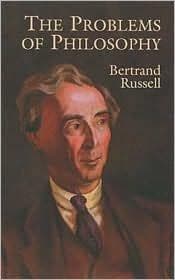
Knowledge, Theory of; Metaphysics; Philosophy -- Introductions
Most of the great ambitious attempts of metaphysicians have proceeded by
the attempt to prove that such and such apparent features of the actual
world were self-contradictory, and therefore could not be real. The
whole tendency of modern thought, however, is more and more in the
direction of showing that the supposed contradictions were illusory, and
that very little can be proved _a priori_ from considerations of what
_must_ be. A good illustration of this is afforded by space and
time. Space and time appear to be infinite in extent, and infinitely
divisible. If we travel along a straight line in either direction, it
is difficult to believe that we shall finally reach a last point,
beyond which there is nothing, not even empty space. Similarly, if in
imagination we travel backwards or forwards in time, it is difficult to
believe that we shall reach a first or last time, with not even empty
time beyond it. Thus space and time appear to be infinite in extent.
Again, if we take any two points on a line, it seems evident that there
must be other points between them however small the distance between
them may be: every distance can be halved, and the halves can be halved
again, and so on _ad infinitum_. In time, similarly, however little
time may elapse between two moments, it seems evident that there will be
other moments between them. Thus space and time appear to be infinitely
divisible. But as against these apparent facts--infinite extent and
infinite divisibility--philosophers have advanced arguments tending to
show that there could be no infinite collections of things, and that
therefore the number of points in space, or of instants in time, must
be finite. Thus a contradiction emerged between the apparent nature of
space and time and the supposed impossibility of infinite collections.
Kant, who first emphasized this contradiction, deduced the impossibility
of space and time, which he declared to be merely subjective; and since
his time very many philosophers have believed that space and time are
mere appearance, not characteristic of the world as it really is. Now,
however, owing to the labours of the mathematicians, notably Georg
Cantor, it has appeared that the impossibility of infinite collections
was a mistake. They are not in fact self-contradictory, but only
contradictory of certain rather obstinate mental prejudices. Hence the
reasons for regarding space and time as unreal have become inoperative,
and one of the great sources of metaphysical constructions is dried up.
Public-domain text, read in full here on John Shaqi.
Reviews
Reviews
No reviews yet
Be the first to share your thoughts on this work.
Elsewhere in the archive
Join the Discussion
Join the discussion
Sign in to leave a comment or review.
Sign InorCreate an account