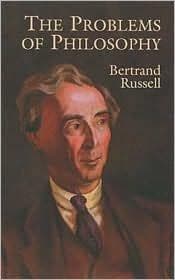
Knowledge, Theory of; Metaphysics; Philosophy -- Introductions
But doubt concerning his own existence was not possible, for if he did
not exist, no demon could deceive him. If he doubted, he must exist; if
he had any experiences whatever, he must exist. Thus his own existence
was an absolute certainty to him. 'I think, therefore I am,' he said
(_Cogito, ergo sum_); and on the basis of this certainty he set to work
to build up again the world of knowledge which his doubt had laid in
ruins. By inventing the method of doubt, and by showing that subjective
things are the most certain, Descartes performed a great service to
philosophy, and one which makes him still useful to all students of the
subject.
But some care is needed in using Descartes' argument. 'I think,
therefore I am' says rather more than is strictly certain. It might seem
as though we were quite sure of being the same person to-day as we were
yesterday, and this is no doubt true in some sense. But the real Self is
as hard to arrive at as the real table, and does not seem to have that
absolute, convincing certainty that belongs to particular experiences.
When I look at my table and see a certain brown colour, what is quite
certain at once is not '_I_ am seeing a brown colour', but rather,
'a brown colour is being seen'. This of course involves something (or
somebody) which (or who) sees the brown colour; but it does not of
itself involve that more or less permanent person whom we call 'I'. So
far as immediate certainty goes, it might be that the something which
sees the brown colour is quite momentary, and not the same as the
something which has some different experience the next moment.
Thus it is our particular thoughts and feelings that have primitive
certainty. And this applies to dreams and hallucinations as well as to
normal perceptions: when we dream or see a ghost, we certainly do have
the sensations we think we have, but for various reasons it is held that
no physical object corresponds to these sensations. Thus the certainty
of our knowledge of our own experiences does not have to be limited in
any way to allow for exceptional cases. Here, therefore, we have, for
what it is worth, a solid basis from which to begin our pursuit of
knowledge.
Public-domain text, read in full here on John Shaqi.
Reviews
Reviews
No reviews yet
Be the first to share your thoughts on this work.
Join the Discussion
Join the discussion
Sign in to leave a comment or review.
Sign InorCreate an account