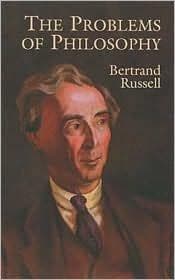
Knowledge, Theory of; Metaphysics; Philosophy -- Introductions
Many philosophers, it is true, have held that philosophy could establish
the truth of certain answers to such fundamental questions. They have
supposed that what is of most importance in religious beliefs could be
proved by strict demonstration to be true. In order to judge of such
attempts, it is necessary to take a survey of human knowledge, and to
form an opinion as to its methods and its limitations. On such a subject
it would be unwise to pronounce dogmatically; but if the investigations
of our previous chapters have not led us astray, we shall be compelled
to renounce the hope of finding philosophical proofs of religious
beliefs. We cannot, therefore, include as part of the value of
philosophy any definite set of answers to such questions. Hence, once
more, the value of philosophy must not depend upon any supposed body of
definitely ascertainable knowledge to be acquired by those who study it.
The value of philosophy is, in fact, to be sought largely in its very
uncertainty. The man who has no tincture of philosophy goes through
life imprisoned in the prejudices derived from common sense, from the
habitual beliefs of his age or his nation, and from convictions which
have grown up in his mind without the co-operation or consent of his
deliberate reason. To such a man the world tends to become definite,
finite, obvious; common objects rouse no questions, and unfamiliar
possibilities are contemptuously rejected. As soon as we begin to
philosophize, on the contrary, we find, as we saw in our opening
chapters, that even the most everyday things lead to problems to which
only very incomplete answers can be given. Philosophy, though unable to
tell us with certainty what is the true answer to the doubts which it
raises, is able to suggest many possibilities which enlarge our thoughts
and free them from the tyranny of custom. Thus, while diminishing our
feeling of certainty as to what things are, it greatly increases our
knowledge as to what they may be; it removes the somewhat arrogant
dogmatism of those who have never travelled into the region of
liberating doubt, and it keeps alive our sense of wonder by showing
familiar things in an unfamiliar aspect.
Public-domain text, read in full here on John Shaqi.
Reviews
Reviews
No reviews yet
Be the first to share your thoughts on this work.
Elsewhere in the archive
Join the Discussion
Join the discussion
Sign in to leave a comment or review.
Sign InorCreate an account