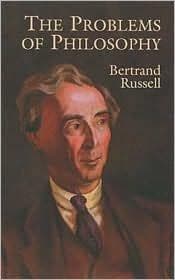
Knowledge, Theory of; Metaphysics; Philosophy -- Introductions
Apart from its utility in showing unsuspected possibilities, philosophy
has a value--perhaps its chief value--through the greatness of the
objects which it contemplates, and the freedom from narrow and personal
aims resulting from this contemplation. The life of the instinctive
man is shut up within the circle of his private interests: family and
friends may be included, but the outer world is not regarded except
as it may help or hinder what comes within the circle of instinctive
wishes. In such a life there is something feverish and confined, in
comparison with which the philosophic life is calm and free. The private
world of instinctive interests is a small one, set in the midst of a
great and powerful world which must, sooner or later, lay our private
world in ruins. Unless we can so enlarge our interests as to include the
whole outer world, we remain like a garrison in a beleagured fortress,
knowing that the enemy prevents escape and that ultimate surrender is
inevitable. In such a life there is no peace, but a constant strife
between the insistence of desire and the powerlessness of will. In one
way or another, if our life is to be great and free, we must escape this
prison and this strife.
One way of escape is by philosophic contemplation. Philosophic
contemplation does not, in its widest survey, divide the universe into
two hostile camps--friends and foes, helpful and hostile, good and
bad--it views the whole impartially. Philosophic contemplation, when it
is unalloyed, does not aim at proving that the rest of the universe is
akin to man. All acquisition of knowledge is an enlargement of the Self,
but this enlargement is best attained when it is not directly sought. It
is obtained when the desire for knowledge is alone operative, by a study
which does not wish in advance that its objects should have this or that
character, but adapts the Self to the characters which it finds in its
objects. This enlargement of Self is not obtained when, taking the Self
as it is, we try to show that the world is so similar to this Self that
knowledge of it is possible without any admission of what seems alien.
The desire to prove this is a form of self-assertion and, like all
self-assertion, it is an obstacle to the growth of Self which it
desires, and of which the Self knows that it is capable. Self-assertion,
in philosophic speculation as elsewhere, views the world as a means to
its own ends; thus it makes the world of less account than Self, and the
Self sets bounds to the greatness of its goods. In contemplation, on
the contrary, we start from the not-Self, and through its greatness the
boundaries of Self are enlarged; through the infinity of the universe
the mind which contemplates it achieves some share in infinity.
Public-domain text, read in full here on John Shaqi.
Reviews
Reviews
No reviews yet
Be the first to share your thoughts on this work.
Elsewhere in the archive
Join the Discussion
Join the discussion
Sign in to leave a comment or review.
Sign InorCreate an account