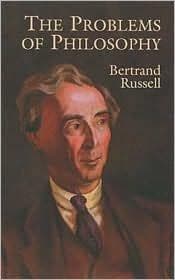
Knowledge, Theory of; Metaphysics; Philosophy -- Introductions
The mind which has become accustomed to the freedom and impartiality of
philosophic contemplation will preserve something of the same freedom
and impartiality in the world of action and emotion. It will view
its purposes and desires as parts of the whole, with the absence of
insistence that results from seeing them as infinitesimal fragments in
a world of which all the rest is unaffected by any one man's deeds. The
impartiality which, in contemplation, is the unalloyed desire for truth,
is the very same quality of mind which, in action, is justice, and in
emotion is that universal love which can be given to all, and not only
to those who are judged useful or admirable. Thus contemplation enlarges
not only the objects of our thoughts, but also the objects of our
actions and our affections: it makes us citizens of the universe, not
only of one walled city at war with all the rest. In this citizenship
of the universe consists man's true freedom, and his liberation from the
thraldom of narrow hopes and fears.
Thus, to sum up our discussion of the value of philosophy; Philosophy
is to be studied, not for the sake of any definite answers to its
questions, since no definite answers can, as a rule, be known to be
true, but rather for the sake of the questions themselves; because
these questions enlarge our conception of what is possible, enrich
our intellectual imagination and diminish the dogmatic assurance which
closes the mind against speculation; but above all because, through the
greatness of the universe which philosophy contemplates, the mind also
is rendered great, and becomes capable of that union with the universe
which constitutes its highest good.
BIBLIOGRAPHICAL NOTE
The student who wishes to acquire an elementary knowledge of philosophy
will find it both easier and more profitable to read some of the works
of the great philosophers than to attempt to derive an all-round view
from handbooks. The following are specially recommended:
Plato: _Republic_, especially Books VI and VII.
Descartes: _Meditations_.
Spinoza: _Ethics_.
Leibniz: _The Monadology_.
Berkeley: _Three Dialogues between Hylas and Philonous_.
Hume: _Enquiry concerning Human Understanding_.
Kant: _Prolegomena to any Future Metaphysic_.
Public-domain text, read in full here on John Shaqi.
Reviews
Reviews
No reviews yet
Be the first to share your thoughts on this work.
Elsewhere in the archive
Join the Discussion
Join the discussion
Sign in to leave a comment or review.
Sign InorCreate an account