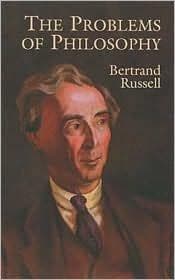
Knowledge, Theory of; Metaphysics; Philosophy -- Introductions
For this reason greatness of soul is not fostered by those philosophies
which assimilate the universe to Man. Knowledge is a form of union
of Self and not-Self; like all union, it is impaired by dominion, and
therefore by any attempt to force the universe into conformity with
what we find in ourselves. There is a widespread philosophical tendency
towards the view which tells us that Man is the measure of all things,
that truth is man-made, that space and time and the world of universals
are properties of the mind, and that, if there be anything not created
by the mind, it is unknowable and of no account for us. This view, if
our previous discussions were correct, is untrue; but in addition to
being untrue, it has the effect of robbing philosophic contemplation of
all that gives it value, since it fetters contemplation to Self. What
it calls knowledge is not a union with the not-Self, but a set of
prejudices, habits, and desires, making an impenetrable veil between
us and the world beyond. The man who finds pleasure in such a theory of
knowledge is like the man who never leaves the domestic circle for fear
his word might not be law.
The true philosophic contemplation, on the contrary, finds its
satisfaction in every enlargement of the not-Self, in everything
that magnifies the objects contemplated, and thereby the subject
contemplating. Everything, in contemplation, that is personal or
private, everything that depends upon habit, self-interest, or desire,
distorts the object, and hence impairs the union which the intellect
seeks. By thus making a barrier between subject and object, such
personal and private things become a prison to the intellect. The free
intellect will see as God might see, without a _here_ and _now_,
without hopes and fears, without the trammels of customary beliefs
and traditional prejudices, calmly, dispassionately, in the sole and
exclusive desire of knowledge--knowledge as impersonal, as purely
contemplative, as it is possible for man to attain. Hence also the free
intellect will value more the abstract and universal knowledge into
which the accidents of private history do not enter, than the knowledge
brought by the senses, and dependent, as such knowledge must be, upon
an exclusive and personal point of view and a body whose sense-organs
distort as much as they reveal.
Public-domain text, read in full here on John Shaqi.
Reviews
Reviews
No reviews yet
Be the first to share your thoughts on this work.
Elsewhere in the archive
Join the Discussion
Join the discussion
Sign in to leave a comment or review.
Sign InorCreate an account