The psycho-analytic study of the familyFlugel, J. C. (John Carl)
Science
The psycho-analytic study of the family
Flugel, J. C. (John Carl)
Families; Marriage; Parent and child; Psychoanalysis
Produced by Turgut Dincer, Jane Robins and the Online
Distributed Proofreading Team at http://www.pgdp.net (This
file was produced from images generously made available
by The Internet Archive)
+----------------------------------------------------------+
| Note: |
| |
| The text surrounded with _this_ indicates italics. |
+----------------------------------------------------------+
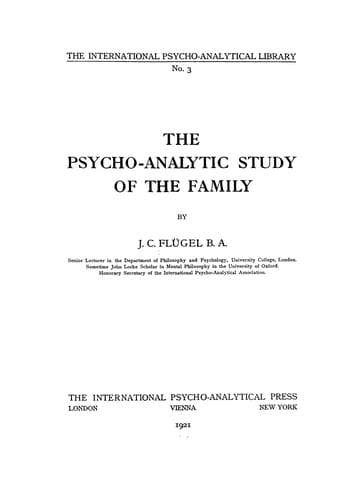
THE INTERNATIONAL
PSYCHO-ANALYTICAL
LIBRARY
EDITED BY ERNEST JONES
No. 3
THE INTERNATIONAL PSYCHO-ANALYTICAL LIBRARY
No. 3
THE
PSYCHO-ANALYTIC STUDY
OF THE FAMILY
BY
J. C. FLÜGEL B. A.
Senior Lecturer in the Department of Philosophy and Psychology,
University College, London. Sometime John Locke Scholar in Mental
Philosophy in the University of Oxford. Honorary Secretary of the
International Psycho-Analytical Association.
THE INTERNATIONAL PSYCHO-ANALYTICAL PRESS
LONDON VIENNA NEW YORK
1921
COPYRIGHT 1921
PRINTED BY
THE SOCIETY FOR GRAPHIC INDUSTRY
VIENNA III
I refer to those appetites which bestir themselves in sleep; when,
during the slumbers of that other part of the soul, which is
rational and tamed and master of the former, the wild animal part,
sated with meat and drink, becomes rampant, and pushing sleep away,
endeavours to set out after the gratification of its own proper
character. You know that in such moments there is nothing that it
dares not do, released and delivered as it is from any sense of
shame and reflection. It does not shrink from attempting in fancy
unholy intercourse with a mother, or with any man or deity or animal
whatever; and it does not hesitate to commit the foulest murder, or
to indulge itself in the most defiling meats. In one word, there is
no limit either to its folly or its audacity.
PLATO, "Republic," Book IX.
* * * * *
Man, forsooth, prides himself on his consciousness! We boast that we
differ from the winds and waves and falling stones and plants, which
grow they know not why, and from the wandering creatures which go up
and down after their prey, as we are pleased to say without the help
of reason. We know so well what we are doing ourselves and why we do
it, do we not? I fancy that there is some truth in the view which is
being put forward nowadays, that it is our less conscious thoughts
and our less conscious actions, which mainly mould our lives and the
lives of those who spring from us.
SAMUEL BUTLER, "The Way of All Flesh,"
Chapter III.
PREFACE
Public-domain text, read in full here on John Shaqi.
Reviews
Reviews
No reviews yet
Be the first to share your thoughts on this work.
Join the Discussion
Join the discussion
Sign in to leave a comment or review.
Sign InorCreate an account