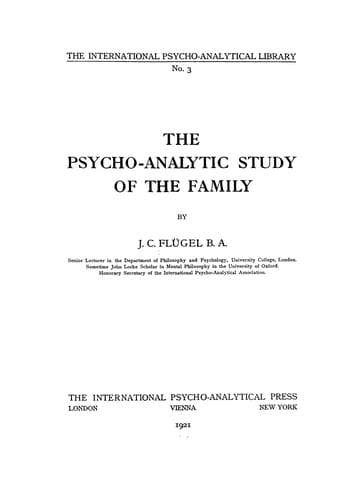
The psycho-analytic study of the familyFlugel, J. C. (John Carl)
Science
The psycho-analytic study of the family
Flugel, J. C. (John Carl)
Families; Marriage; Parent and child; Psychoanalysis
The displacement on to medical advisers and attendants originally directed
to the parents, has frequently been recognised. Here again, it is more
particularly the attribute of benevolent omniscience that is liable to be
transferred. Three factors contribute especially to this result:--(1) The
physician's knowledge on matters of the highest interest and importance,
about which others are relatively ignorant (particularly perhaps "medical"
matters, in the sexual sense of that euphemism); (2) the fact that the
situations in which his assistance is called in, for the most part
urgently demand some kind of action which he alone can adequately perform;
the sense of helplessness which others feel in these situations being
similar in many respects to that frequently experienced in early years
when, as children, we were dependent upon the efforts of our parents in
many of the important affairs of life; (3) the fact that this sense of
helplessness and the general attitude of suggestibility are still further
increased in the case of the patient by the general regression to a
relatively childish state of mind which illness so frequently brings in
its train. The physician's capacity to stimulate and maintain the power
of suggestion, which he possesses in virtue of this attitude on the part
of those who consult him, is undoubtedly the secret of much real success
in medical practice, inasmuch as the mental factors in disease--the
importance of which is now becoming fully recognised, although their
nature is not yet always clear--are to a large extent directly affected by
the patient's belief in his doctor's ability to understand and cure the
complaint from which he suffers.
[Sidenote: The rôle of parent-regarding tendencies in suggestion and
hypnosis]
Public-domain text, read in full here on John Shaqi.
Reviews
Reviews
No reviews yet
Be the first to share your thoughts on this work.
Elsewhere in the archive
Join the Discussion
Join the discussion
Sign in to leave a comment or review.
Sign InorCreate an account