Man has a limited number of wants, and there is an end even to whims.
When all of these have been satisfied, what is left? The ordinary man
must give time, skill, thought, and labor to satisfy his needs, and
from the effort he gets a large measure of joy and satisfaction. Even
if he never gets what he is after, the effort has given him pleasure,
strengthened his purpose, and developed his whole nature. But the
wealthy man is denied this natural satisfaction. He does not even
have to seek what he wants; servants do that for him; he speaks and
the thing is done. For him there is no joyous effort; no increase of
pleasure in the very delay of fulfillment; no sense of achievement when
he gets what he desires. For this reason he soon wearies, and, having
run the whole gamut of pleasures, and exhausted his idle fancies, he
becomes a prey to ennui, has no object in life, and finds no delight
in the days. It could not be otherwise. As an old servant in my family
once said, “If the rich were happy, we should know there was no God.”
“How hardly shall a rich man enter into the kingdom of heaven,” said
Jesus; meaning thereby that the possession of wealth destroys our
sympathy with our poorer brethren and prevents a man from seeing his
true relation to those who have it not; makes it difficult for him to
recognize his oneness with all mankind, and so cuts him off from that
heaven of love and peace on earth that can come only from agreement of
his own life with the life of others outside his circle.
If we are worried or ill at ease for any other cause, such as
ill-health, disappointed affections, unsatisfied desires, or from any
of the innumerable causes to which we attribute our ill, we have but
to examine them to find that in every instance the underlying error is
the same. It is that we think of our separate interests, that we are
for self; that “me” has a deeper significance to our mind than “us”
that the “I” blots out the “thou.” All worry, all unrest comes from
self-seeking, from the feeling of separateness rather than of oneness;
from an inharmonious attitude towards life and its underlying verities.
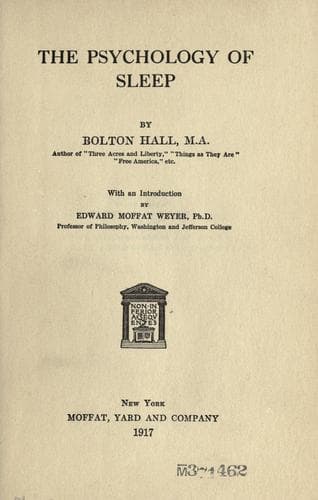
Public-domain text, read in full here on John Shaqi.
Reviews
Reviews
No reviews yet
Be the first to share your thoughts on this work.
Elsewhere in the archive
Join the Discussion
Join the discussion
Sign in to leave a comment or review.
Sign InorCreate an account