“I can’t make their swords play!” she moaned. “All my swords are stiff
as shinny sticks. The trouble is, I don’t know men, Miss Claes--not red
animal men like they should be in this story. I know pussy men. I know
pious men, salvey and wormy men, monks and mummies and monsters, but I
don’t know honest-to-God _men_! Here they are taunting each other as
they stab, and their talk sounds--like Shakespeare! Oh, dear, you’ve
brought me more coffee and eats!”
“I won’t touch your papers, Pidge, but if you take them off the cot,
I’ll put the tray between us. I haven’t had breakfast.”
Pidge turned the roller of her typemill down so that the most recent
literary revelation might not appear to a roving eye. Then she
crisscrossed different packages of manuscript, placed the mass face
down before the waving glass, and moved the oil stove aside so she
could pass to her place on the cot.
“You always forget to bring your coffeepot down to the range, Pidge----”
The girl turned back to her typemachine. “He’s a jealous old devil when
I leave the room,” she said. “I think the person who rented him before
I did addressed envelopes all day--kept cranking him back and forth
against time. Now I ride a little ways--then let him stop and browse.
We ramble----”
Pidge stopped. Her eyes looked dry and smarting, as if tears were on
the verge.
“Oh, Miss Claes,” she went on, “I’m just as crazy as that--I mean my
figures of speech! Cranking him back and forth, and in the same breath
letting him stop and browse. I wish you wouldn’t bring me this stuff
any more. The coffee’s so good that it hurts--and the eggs. I always
cry when I’m hurt.”
“But, Pidge, think what a privilege it is for me to climb from the
heart of New York to eighteenth-century France, and not leave the
house----”
“But you find a twisted cubist sort of France--part Dumas, part Mexican
Plaza, Los Angeles, and the rest _me_!”
“At least, you’re not carried away with the idea that it’s perfect.”
Pidge regarded the other’s face closely. She could see with uncanny
clearness in this little dark room where she had struggled night and
day for nearly three months; but what she saw now, or was looking for,
she hardly knew herself. Her own face was spooky from sleepless strain.
“I’m eating shamelessly,” she said.
A moment later, she pointed to the rear wall, and whispered the
question:
“Has Nagar stopped writing? I haven’t raced typewriters with him
lately.”
“He hasn’t spoken of changing his work. Did you hear that New York has
touched him with her magic?” Miss Claes asked.
“What do you mean?”
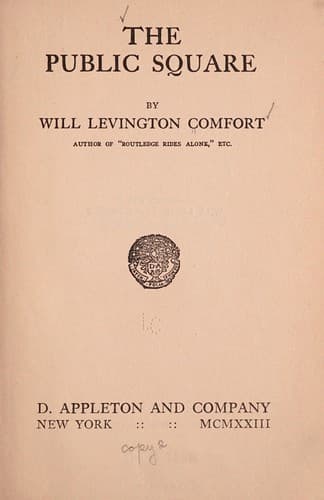
“He has sold a story--a short story for two hundred dollars to _The
Public Square_.”
“Nagar--your servant?”
“He isn’t my servant, Pidge. He just lives here and works with me.”
There was a clicking dryness to the girl’s tongue, as she asked:
“And now is he going away? You said they always do when they strike it
rich.”
“Oh, no. Nagar wouldn’t leave for a little story success. But nobody
quite knows Nagar--nobody.”
Public-domain text, read in full here on John Shaqi.
Reviews
Reviews
No reviews yet
Be the first to share your thoughts on this work.
Join the Discussion
Join the discussion
Sign in to leave a comment or review.
Sign InorCreate an account