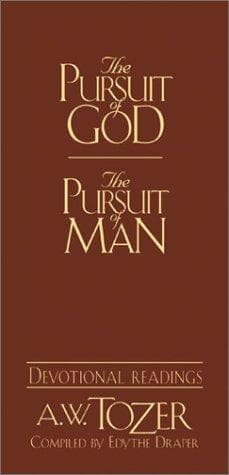
God (Christianity) -- Worship and love; Spirituality
Let me exhort you to take this seriously. It is not to be understood as
mere Bible teaching to be stored away in the mind along with an inert
mass of other doctrines. It is a marker on the road to greener pastures,
a path chiseled against the steep sides of the mount of God. We dare not
try to by-pass it if we would follow on in this holy pursuit. We must
ascend a step at a time. If we refuse one step we bring our progress to
an end.
As is frequently true, this New Testament principle of spiritual life
finds its best illustration in the Old Testament. In the story of
Abraham and Isaac we have a dramatic picture of the surrendered life as
well as an excellent commentary on the first Beatitude.
Abraham was old when Isaac was born, old enough indeed to have been his
grandfather, and the child became at once the delight and idol of his
heart. From that moment when he first stooped to take the tiny form
awkwardly in his arms he was an eager love slave of his son. God went
out of His way to comment on the strength of this affection. And it is
not hard to understand. The baby represented everything sacred to his
father's heart: the promises of God, the covenants, the hopes of the
years and the long messianic dream. As he watched him grow from babyhood
to young manhood the heart of the old man was knit closer and closer
with the life of his son, till at last the relationship bordered upon
the perilous. It was then that God stepped in to save both father and
son from the consequences of an uncleansed love.
"Take now thy son," said God to Abraham, "thine only son Isaac, whom
thou lovest, and get thee into the land of Moriah; and offer him there
for a burnt-offering upon one of the mountains which I will tell thee
of." The sacred writer spares us a close-up of the agony that night on
the slopes near Beersheba when the aged man had it out with his God, but
respectful imagination may view in awe the bent form and convulsive
wrestling alone under the stars. Possibly not again until a Greater than
Abraham wrestled in the Garden of Gethsemane did such mortal pain visit
a human soul. If only the man himself might have been allowed to die.
That would have been easier a thousand times, for he was old now, and to
die would have been no great ordeal for one who had walked so long with
God. Besides, it would have been a last sweet pleasure to let his
dimming vision rest upon the figure of his stalwart son who would live
to carry on the Abrahamic line and fulfill in himself the promises of
God made long before in Ur of the Chaldees.
Public-domain text, read in full here on John Shaqi.
Reviews
Reviews
No reviews yet
Be the first to share your thoughts on this work.
Join the Discussion
Join the discussion
Sign in to leave a comment or review.
Sign InorCreate an account