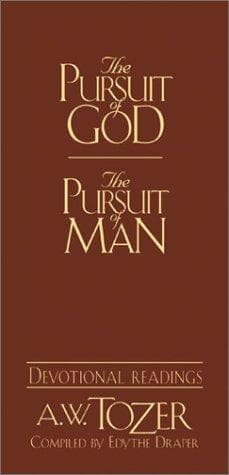
God (Christianity) -- Worship and love; Spirituality
I have said that Abraham possessed nothing. Yet was not this poor man
rich? Everything he had owned before was his still to enjoy: sheep,
camels, herds, and goods of every sort. He had also his wife and his
friends, and best of all he had his son Isaac safe by his side. He had
everything, but _he possessed nothing_. There is the spiritual secret.
There is the sweet theology of the heart which can be learned only in
the school of renunciation. The books on systematic theology overlook
this, but the wise will understand.
After that bitter and blessed experience I think the words "my" and
"mine" never had again the same meaning for Abraham. The sense of
possession which they connote was gone from his heart. _Things_ had been
cast out forever. They had now become external to the man. His inner
heart was free from them. The world said, "Abraham is rich," but the
aged patriarch only smiled. He could not explain it to them, but he knew
that he owned nothing, that his real treasures were inward and eternal.
There can be no doubt that this possessive clinging to things is one of
the most harmful habits in the life. Because it is so natural it is
rarely recognized for the evil that it is; but its outworkings are
tragic.
We are often hindered from giving up our treasures to the Lord out of
fear for their safety; this is especially true when those treasures are
loved relatives and friends. But we need have no such fears. Our Lord
came not to destroy but to save. Everything is safe which we commit to
Him, and nothing is really safe which is not so committed.
Our gifts and talents should also be turned over to Him. They should be
recognized for what they are, God's loan to us, and should never be
considered in any sense our own. We have no more right to claim credit
for special abilities than for blue eyes or strong muscles. "For who
maketh thee to differ from another? and what hast thou that thou didst
not receive?"
The Christian who is alive enough to know himself even slightly will
recognize the symptoms of this possession malady, and will grieve to
find them in his own heart. If the longing after God is strong enough
within him he will want to do something about the matter. Now, what
should he do?
First of all he should put away all defense and make no attempt to
excuse himself either in his own eyes or before the Lord. Whoever
defends himself will have himself for his defense, and he will have no
other; but let him come defenseless before the Lord and he will have for
his defender no less than God Himself. Let the inquiring Christian
trample under foot every slippery trick of his deceitful heart and
insist upon frank and open relations with the Lord.
Public-domain text, read in full here on John Shaqi.
Reviews
Reviews
No reviews yet
Be the first to share your thoughts on this work.
Join the Discussion
Join the discussion
Sign in to leave a comment or review.
Sign InorCreate an account