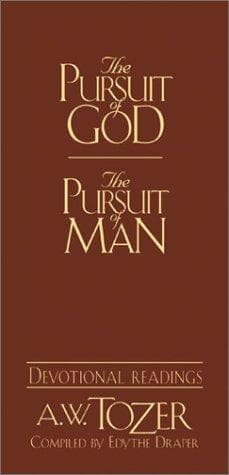
God (Christianity) -- Worship and love; Spirituality
That God is here and that He is speaking--these truths are back of all
other Bible truths; without them there could be no revelation at all.
God did not write a book and send it by messenger to be read at a
distance by unaided minds. He spoke a Book and lives in His spoken
words, constantly speaking His words and causing the power of them to
persist across the years. God breathed on clay and it became a man; He
breathes on men and they become clay. "Return ye children of men" was
the word spoken at the Fall by which God decreed the death of every man,
and no added word has He needed to speak. The sad procession of mankind
across the face of the earth from birth to the grave is proof that His
original Word was enough.
We have not given sufficient attention to that deep utterance in the
Book of John, "That was the true Light, which lighteth every man that
cometh into the world." Shift the punctuation around as we will and the
truth is still there: the Word of God affects the hearts of all men as
light in the soul. In the hearts of all men the light shines, the Word
sounds, and there is no escaping them. Something like this would of
necessity be so if God is alive and in His world. And John says that it
is so. Even those persons who have never heard of the Bible have still
been preached to with sufficient clarity to remove every excuse from
their hearts forever. "Which show the work of the law written in their
hearts, their conscience also bearing witness, and their thoughts the
mean while either accusing or else excusing one another." "For the
invisible things of him from the creation of the world are clearly seen,
being understood by the things that are made, even his eternal power and
Godhead; so that they are without excuse."
This universal Voice of God was by the ancient Hebrews often called
Wisdom, and was said to be everywhere sounding and searching throughout
the earth, seeking some response from the sons of men. The eighth
chapter of the Book of Proverbs begins, "Doth not wisdom cry? and
understanding put forth her voice?" The writer then pictures wisdom as a
beautiful woman standing "in the top of the high places, by the way in
the places of the paths." She sounds her voice from every quarter so
that no one may miss hearing it. "Unto you, O men, I call; and my voice
is to the sons of men." Then she pleads for the simple and the foolish
to give ear to her words. It is spiritual response for which this Wisdom
of God is pleading, a response which she has always sought and is but
rarely able to secure. The tragedy is that our eternal welfare depends
upon our hearing, and we have trained our ears not to hear.
Public-domain text, read in full here on John Shaqi.
Reviews
Reviews
No reviews yet
Be the first to share your thoughts on this work.
Join the Discussion
Join the discussion
Sign in to leave a comment or review.
Sign InorCreate an account