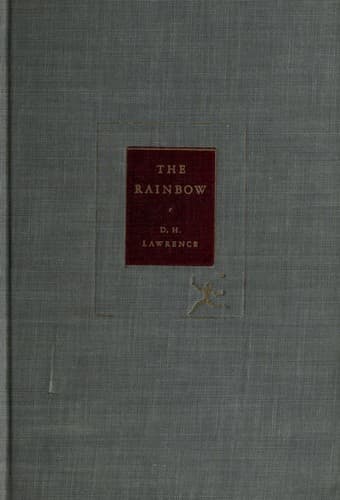
Domestic fiction; Family -- England -- Midlands -- Fiction; Midlands (England) -- Fiction
The return or the departure of the father was the one event which the
child remembered. When he came, something woke up in her, some
yearning. She knew when he was out of joint or irritable or tired: then
she was uneasy, she could not rest.
When he was in the house, the child felt full and warm, rich like a
creature in the sunshine. When he was gone, she was vague, forgetful.
When he scolded her even, she was often more aware of him than of
herself. He was her strength and her greater self.
Ursula was three years old when another baby girl was born. Then the
two small sisters were much together, Gudrun and Ursula. Gudrun was a
quiet child who played for hours alone, absorbed in her fancies. She
was brown-haired, fair-skinned, strangely placid, almost passive. Yet
her will was indomitable, once set. From the first she followed
Ursula’s lead. Yet she was a thing to herself, so that to watch the two
together was strange. They were like two young animals playing together
but not taking real notice of each other. Gudrun was the mother’s
favourite—except that Anna always lived in her latest baby.
The burden of so many lives depending on him wore the youth down. He
had his work in the office, which was done purely by effort of will: he
had his barren passion for the church; he had three young children.
Also at this time his health was not good. So he was haggard and
irritable, often a pest in the house. Then he was told to go to his
woodwork, or to the church.
Between him and the little Ursula there came into being a strange
alliance. They were aware of each other. He knew the child was always
on his side. But in his consciousness he counted it for nothing. She
was always for him. He took it for granted. Yet his life was based on
her, even whilst she was a tiny child, on her support and her accord.
Anna continued in her violent trance of motherhood, always busy, often
harassed, but always contained in her trance of motherhood. She seemed
to exist in her own violent fruitfulness, and it was as if the sun
shone tropically on her. Her colour was bright, her eyes full of a
fecund gloom, her brown hair tumbled loosely over her ears. She had a
look of richness. No responsibility, no sense of duty troubled her. The
outside, public life was less than nothing to her, really.
Public-domain text, read in full here on John Shaqi.
Reviews
Reviews
No reviews yet
Be the first to share your thoughts on this work.
Elsewhere in the archive
Join the Discussion
Join the discussion
Sign in to leave a comment or review.
Sign InorCreate an account