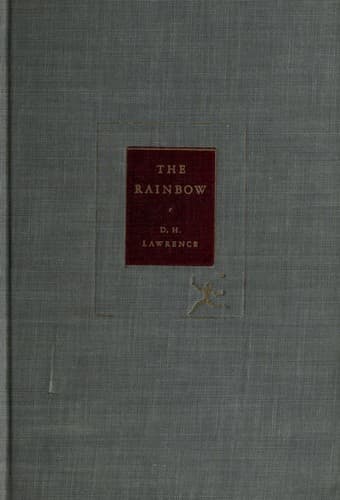
Domestic fiction; Family -- England -- Midlands -- Fiction; Midlands (England) -- Fiction
So she ground away at her work, never giving it up. Some things she
liked. Her subjects were English, Latin, French, mathematics and
history. Once she knew how to read French and Latin, the syntax bored
her. Most tedious was the close study of English literature. Why should
one remember the things one read? Something in mathematics, their cold
absoluteness, fascinated her, but the actual practice was tedious. Some
people in history puzzled her and made her ponder, but the political
parts angered her, and she hated ministers. Only in odd streaks did she
get a poignant sense of acquisition and enrichment and enlarging from
her studies; one afternoon, reading _As You Like It_; once when, with
her blood, she heard a passage of Latin, and she knew how the blood
beat in a Roman’s body; so that ever after she felt she knew the Romans
by contact. She enjoyed the vagaries of English Grammar, because it
gave her pleasure to detect the live movements of words and sentences;
and mathematics, the very sight of the letters in Algebra, had a real
lure for her.
She felt so much and so confusedly at this time, that her face got a
queer, wondering, half-scared look, as if she were not sure what might
seize upon her at any moment out of the unknown.
Odd little bits of information stirred unfathomable passion in her.
When she knew that in the tiny brown buds of autumn were folded, minute
and complete, the finished flowers of the summer nine months hence,
tiny, folded up, and left there waiting, a flash of triumph and love
went over her.
“I could never die while there was a tree,” she said passionately,
sententiously, standing before a great ash in worship.
It was the people who, somehow, walked as an upright menace to her. Her
life at this time was unformed, palpitating, essentially shrinking from
all touch. She gave something to other people, but she was never
herself, since she had no self. She was not afraid nor ashamed before
trees, and birds, and the sky. But she shrank violently from people,
ashamed she was not as they were, fixed, emphatic, but a wavering,
undefined sensibility only, without form or being.
Gudrun was at this time a great comfort and shield to her. The younger
girl was a lithe, _farouche_ animal, who mistrusted all approach, and
would have none of the petty secrecies and jealousies of schoolgirl
intimacy. She would have no truck with the tame cats, nice or not,
because she believed that they were all only untamed cats with a nasty,
untrustworthy habit of tameness.
This was a great stand-back for Ursula, who suffered agonies when she
thought a person disliked her, no matter how much she despised that
other person. How could anyone dislike _her_, Ursula Brangwen? The
question terrified her and was unanswerable. She sought refuge in
Gudrun’s natural, proud indifference.
Public-domain text, read in full here on John Shaqi.
Reviews
Reviews
No reviews yet
Be the first to share your thoughts on this work.
Elsewhere in the archive
Join the Discussion
Join the discussion
Sign in to leave a comment or review.
Sign InorCreate an account