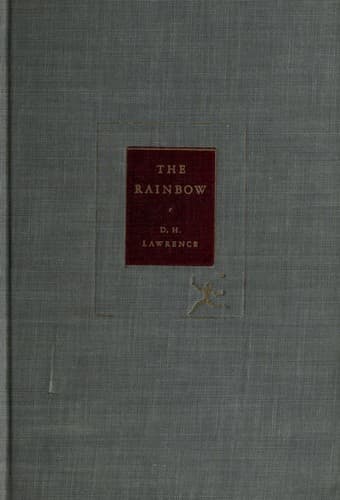
Domestic fiction; Family -- England -- Midlands -- Fiction; Midlands (England) -- Fiction
She still adhered to Winifred Inger. But a sort of nausea was coming
over her. She loved her mistress. But a heavy, clogged sense of
deadness began to gather upon her, from the other woman’s contact. And
sometimes she thought Winifred was ugly, clayey. Her female hips seemed
big and earthy, her ankles and her arms were too thick. She wanted some
fine intensity, instead of this heavy cleaving of moist clay, that
cleaves because it has no life of its own.
Winifred still loved Ursula. She had a passion for the fine flame of
the girl, she served her endlessly, would have done anything for her.
“Come with me to London,” she pleaded to the girl. “I will make it nice
for you,—you shall do lots of things you will enjoy.”
“No,” said Ursula, stubbornly and dully. “No, I don’t want to go to
London, I want to be by myself.”
Winifred knew what this meant. She knew that Ursula was beginning to
reject her. The fine, unquenchable flame of the younger girl would
consent no more to mingle with the perverted life of the elder woman.
Winifred knew it would come. But she too was proud. At the bottom of
her was a black pit of despair. She knew perfectly well that Ursula
would cast her off.
And that seemed like the end of her life. But she was too hopeless to
rage. Wisely, economizing what was left of Ursula’s love, she went away
to London, leaving the beloved girl alone.
And after a fortnight, Ursula’s letters became tender again, loving.
Her Uncle Tom had invited her to go and stay with him. He was managing
a big, new colliery in Yorkshire. Would Winifred come too?
For now Ursula was imagining marriage for Winifred. She wanted her to
marry her Uncle Tom. Winifred knew this. She said she would come to
Wiggiston. She would now let fate do as it liked with her, since there
was nothing remaining to be done. Tom Brangwen also saw Ursula’s
intention. He too was at the end of his desires. He had done the things
he had wanted to. They had all ended in a disintegrated lifelessness of
soul, which he hid under an utterly tolerant good-humour. He no longer
cared about anything on earth, neither man nor woman, nor God nor
humanity. He had come to a stability of nullification. He did not care
any more, neither about his body nor about his soul. Only he would
preserve intact his own life. Only the simple, superficial fact of
living persisted. He was still healthy. He lived. Therefore he would
fill each moment. That had always been his creed. It was not
instinctive easiness: it was the inevitable outcome of his nature. When
he was in the absolute privacy of his own life, he did as he pleased,
unscrupulous, without any ulterior thought. He believed neither in good
nor evil. Each moment was like a separate little island, isolated from
time, and blank, unconditioned by time.
Public-domain text, read in full here on John Shaqi.
Reviews
Reviews
No reviews yet
Be the first to share your thoughts on this work.
Elsewhere in the archive
Join the Discussion
Join the discussion
Sign in to leave a comment or review.
Sign InorCreate an account