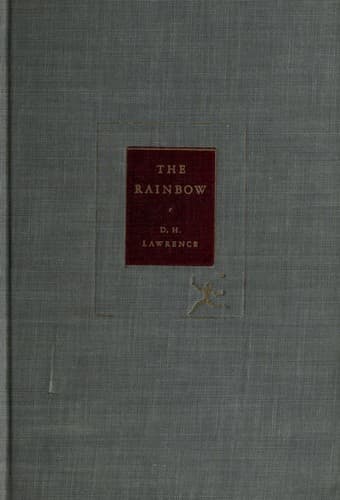
Domestic fiction; Family -- England -- Midlands -- Fiction; Midlands (England) -- Fiction
The day passed incredibly slowly. She never knew what to do, there came
horrible gaps, when she was merely exposed to the children; and when,
relying on some pert little girl for information, she had started a
lesson, she did not know how to go on with it properly. The children
were her masters. She deferred to them. She could always hear Mr.
Brunt. Like a machine, always in the same hard, high, inhuman voice he
went on with his teaching, oblivious of everything. And before this
inhuman number of children she was always at bay. She could not get
away from it. There it was, this class of fifty collective children,
depending on her for command, for command it hated and resented. It
made her feel she could not breathe: she must suffocate, it was so
inhuman. They were so many, that they were not children. They were a
squadron. She could not speak as she would to a child, because they
were not individual children, they were a collective, inhuman thing.
Dinner-time came, and stunned, bewildered, solitary, she went into the
teachers’ room for dinner. Never had she felt such a stranger to life
before. It seemed to her she had just disembarked from some strange
horrible state where everything was as in hell, a condition of hard,
malevolent system. And she was not really free. The afternoon drew at
her like some bondage.
The first week passed in a blind confusion. She did not know how to
teach, and she felt she never would know. Mr. Harby came down every now
and then to her class, to see what she was doing. She felt so
incompetent as he stood by, bullying and threatening, so unreal, that
she wavered, became neutral and non-existent. But he stood there
watching with the listening-genial smile of the eyes, that was really
threatening; he said nothing, he made her go on teaching, she felt she
had no soul in her body. Then he went away, and his going was like a
derision. The class was his class. She was a wavering substitute. He
thrashed and bullied, he was hated. But he was master. Though she was
gentle and always considerate of her class, yet they belonged to Mr.
Harby, and they did not belong to her. Like some invincible source of
the mechanism he kept all power to himself. And the class owned his
power. And in school it was power, and power alone that mattered.
Soon Ursula came to dread him, and at the bottom of her dread was a
seed of hate, for she despised him, yet he was master of her. Then she
began to get on. All the other teachers hated him, and fanned their
hatred among themselves. For he was master of them and the children, he
stood like a wheel to make absolute his authority over the herd. That
seemed to be his one reason in life, to hold blind authority over the
school. His teachers were his subjects as much as the scholars. Only,
because they had some authority, his instinct was to detest them.
Public-domain text, read in full here on John Shaqi.
Reviews
Reviews
No reviews yet
Be the first to share your thoughts on this work.
Elsewhere in the archive
Join the Discussion
Join the discussion
Sign in to leave a comment or review.
Sign InorCreate an account