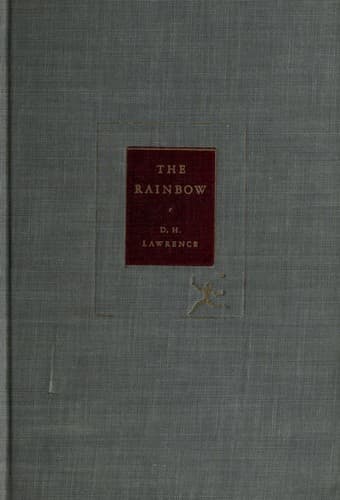
Domestic fiction; Family -- England -- Midlands -- Fiction; Midlands (England) -- Fiction
She did not believe that she could ever teach that great, brutish
class, in that brutal school: ever, ever. And yet, if she failed, she
must in some way go under. She must admit that the man’s world was too
strong for her, she could not take her place in it; she must go down
before Mr. Harby. And all her life henceforth, she must go on, never
having freed herself of the man’s world, never having achieved the
freedom of the great world of responsible work. Maggie had taken her
place there, she had even stood level with Mr. Harby and got free of
him: and her soul was always wandering in far-off valleys and glades of
poetry. Maggie was free. Yet there was something like subjection in
Maggie’s very freedom. Mr. Harby, the man, disliked the reserved woman,
Maggie. Mr. Harby, the schoolmaster, respected his teacher, Miss
Schofield.
For the present, however, Ursula only envied and admired Maggie. She
herself had still to get where Maggie had got. She had still to make
her footing. She had taken up a position on Mr. Harby’s ground, and she
must keep it. For he was now beginning a regular attack on her, to
drive her away out of his school. She could not keep order. Her class
was a turbulent crowd, and the weak spot in the school’s work.
Therefore she must go, and someone more useful must come in her place,
someone who could keep discipline.
The headmaster had worked himself into an obsession of fury against
her. He only wanted her gone. She had come, she had got worse as the
weeks went on, she was absolutely no good. His system, which was his
very life in school, the outcome of his bodily movement, was attacked
and threatened at the point where Ursula was included. She was the
danger that threatened his body with a blow, a fall. And blindly,
thoroughly, moving from strong instinct of opposition, he set to work
to expel her.
When he punished one of her children as he had punished the boy Hill,
for an offence against _himself,_ he made the punishment extra heavy
with the significance that the extra stroke came in because of the weak
teacher who allowed all these things to be. When he punished for an
offence against her, he punished lightly, as if offences against her
were not significant. Which all the children knew, and they behaved
accordingly.
Public-domain text, read in full here on John Shaqi.
Reviews
Reviews
No reviews yet
Be the first to share your thoughts on this work.
Elsewhere in the archive
Join the Discussion
Join the discussion
Sign in to leave a comment or review.
Sign InorCreate an account