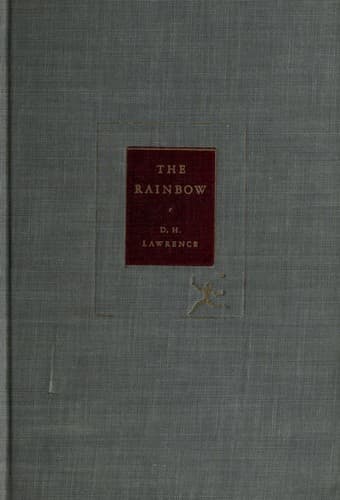
Domestic fiction; Family -- England -- Midlands -- Fiction; Midlands (England) -- Fiction
At home, even so near as Cossethay, was the vicar, who spoke the other,
magic language, and had the other, finer bearing, both of which she
could perceive, but could never attain to. The vicar moved in worlds
beyond where her own menfolk existed. Did she not know her own menfolk:
fresh, slow, full-built men, masterful enough, but easy, native to the
earth, lacking outwardness and range of motion. Whereas the vicar, dark
and dry and small beside her husband, had yet a quickness and a range
of being that made Brangwen, in his large geniality, seem dull and
local. She knew her husband. But in the vicar’s nature was that which
passed beyond her knowledge. As Brangwen had power over the cattle so
the vicar had power over her husband. What was it in the vicar, that
raised him above the common men as man is raised above the beast? She
craved to know. She craved to achieve this higher being, if not in
herself, then in her children. That which makes a man strong even if he
be little and frail in body, just as any man is little and frail beside
a bull, and yet stronger than the bull, what was it? It was not money
nor power nor position. What power had the vicar over Tom
Brangwen—none. Yet strip them and set them on a desert island, and the
vicar was the master. His soul was master of the other man’s. And
why—why? She decided it was a question of knowledge.
The curate was poor enough, and not very efficacious as a man, either,
yet he took rank with those others, the superior. She watched his
children being born, she saw them running as tiny things beside their
mother. And already they were separate from her own children, distinct.
Why were her own children marked below the others? Why should the
curate’s children inevitably take precedence over her children, why
should dominance be given them from the start? It was not money, nor
even class. It was education and experience, she decided.
It was this, this education, this higher form of being, that the mother
wished to give to her children, so that they too could live the supreme
life on earth. For her children, at least the children of her heart,
had the complete nature that should take place in equality with the
living, vital people in the land, not be left behind obscure among the
labourers. Why must they remain obscured and stifled all their lives,
why should they suffer from lack of freedom to move? How should they
learn the entry into the finer, more vivid circle of life?
Public-domain text, read in full here on John Shaqi.
Reviews
Reviews
No reviews yet
Be the first to share your thoughts on this work.
Join the Discussion
Join the discussion
Sign in to leave a comment or review.
Sign InorCreate an account