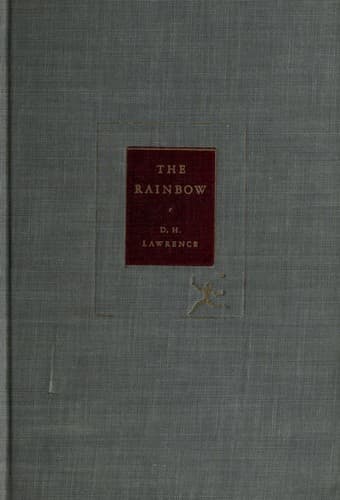
Domestic fiction; Family -- England -- Midlands -- Fiction; Midlands (England) -- Fiction
The birds pecked busily round him, the horses were fresh and ready, the
bare branches of the trees flung themselves up like a man yawning, taut
with energy, the twigs radiated off into the clear light. He was alive
and full of zest for it all. And if his wife were heavy, separated from
him, extinguished, then, let her be, let him remain himself. Things
would be as they would be. Meanwhile he heard the ringing crow of a
cockerel in the distance, he saw the pale shell of the moon effaced on
a blue sky.
So he shouted to the horses, and was happy. If, driving into Ilkeston,
a fresh young woman were going in to do her shopping, he hailed her,
and reined in his horse, and picked her up. Then he was glad to have
her near him, his eyes shone, his voice, laughing, teasing in a warm
fashion, made the poise of her head more beautiful, her blood ran
quicker. They were both stimulated, the morning was fine.
What did it matter that, at the bottom of his heart, was care and pain?
It was at the bottom, let it stop at the bottom. His wife, her
suffering, her coming pain—well, it must be so. She suffered, but he
was out of doors, full in life, and it would be ridiculous, indecent,
to pull a long face and to insist on being miserable. He was happy,
this morning, driving to town, with the hoofs of the horse spanking the
hard earth. Well he was happy, if half the world were weeping at the
funeral of the other half. And it was a jolly girl sitting beside him.
And Woman was immortal, whatever happened, whoever turned towards
death. Let the misery come when it could not be resisted.
The evening arrived later very beautiful, with a rosy flush hovering
above the sunset, and passing away into violet and lavender, with
turquoise green north and south in the sky, and in the east, a great,
yellow moon hanging heavy and radiant. It was magnificent to walk
between the sunset and the moon, on a road where little holly trees
thrust black into the rose and lavender, and starlings flickered in
droves across the light. But what was the end of the journey? The pain
came right enough, later on, when his heart and his feet were heavy,
his brain dead, his life stopped.
One afternoon, the pains began, Mrs. Brangwen was put to bed, the
midwife came. Night fell, the shutters were closed, Brangwen came in to
tea, to the loaf and the pewter teapot, the child, silent and
quivering, playing with glass beads, the house, empty, it seemed, or
exposed to the winter night, as if it had no walls.
Public-domain text, read in full here on John Shaqi.
Reviews
Reviews
No reviews yet
Be the first to share your thoughts on this work.
Join the Discussion
Join the discussion
Sign in to leave a comment or review.
Sign InorCreate an account