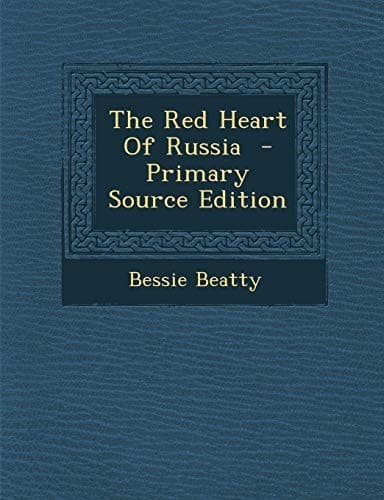
Saint Petersburg (Russia) -- History -- Revolution, 1917-1921; Soviet Union -- History -- Revolution, 1917-1921
The huge red stucco building--acres and acres of it--had been swept and
dusted and polished until Nicholas himself could have found no spot at
which to point the imperial finger of disapproval. The big mahogany
bath-tub in the ambassador’s suite had been scrubbed for the last
time. The nudity of the tiny ultra-modern brass bed, cowering behind
the crushed-mulberry curtains, had been only partly covered with fresh
linen and a new silk eiderdown quilt. The huge oval-topped mahogany
table from which Peter the Great had taken his caviar and vodka was
prepared to serve ham and eggs American style. As I looked from behind
the pink silk curtains out on the blue waters of the Neva, sparkling
in the spring sunshine, I wondered what the coming of these Americans
would mean to Russia.
While official Russia was getting ready to welcome my countrymen, I
had been trying to find out what unofficial Russia was thinking about.
With the help of an interpreter, I had been listening to the babble of
voices that sounded through the golden days and white nights. Already I
had learned that revolution is a term as variable as truth, and newly
mined by every man who speaks it.
I discovered that the Revolution that overthrew the Tsar and absolutism
was a simple thing, beautifully logical, gloriously unanimous. Every
one wanted it; every one was glad when it came. The monarchy that had
brought such desperate misery to the millions crumbled to dust with the
first vigorous blow of the rising peoples like a thing long since dead.
The heavy heart of Russia lifted in a mighty shout of joy: “Svoboda!
(Freedom.) We are free!”
For the moment this was enough. That single word, with its age-old
power of placing man on the mountain-tops, made Russia happy.
Soon her people began to be specific.
“Freedom for the peasant,” they said. “Freedom for the worker.”
“Freedom for the soldier.” “Freedom for the Jew.” “Freedom for women.”
Russia still rejoiced, but with certain vague mental reservations
faintly disturbed by this diversity. Then came definition. Each man
translated revolution into the terms of his own life.
Nicolai Voronoff, whom I met at dinner one night, voiced the
conservative intellectuals’ idea of freedom.
“Things could not go on as they were,” he said. “We had to have
freedom. Freedom of speech, freedom of press, freedom of assembly,
inviolability of person--freedom as you Americans and English know it.”
Old Chekmar, the peasant delegate from a remote south Russian village,
spoke of freedom in terms of land.
“Freedom for the peasant,” he said. “Yes, yes, land--we shall have
land. The Tsar Alexander gave it to us when he freed the serfs, but the
landlords have kept it away. Mother earth--it is ours at last!--God’s
and the people’s.”
Chekmar tossed his fine old head in a gesture of pride and exaltation
as he said it, and his dull blue eyes were lit with the fervor of
young ideals.
Public-domain text, read in full here on John Shaqi.
Reviews
Reviews
No reviews yet
Be the first to share your thoughts on this work.
Join the Discussion
Join the discussion
Sign in to leave a comment or review.
Sign InorCreate an account