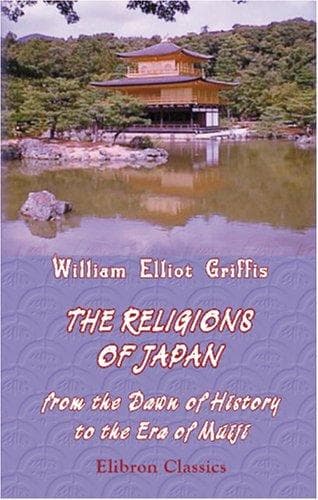
The Religions of Japan, from the Dawn of History to the Era of MéijiGriffis, William Elliot
Religion
The Religions of Japan, from the Dawn of History to the Era of Méiji
Griffis, William Elliot
Japan -- Religion
One of the most remarkable features of Shintō was the emphasis laid
on cleanliness. Pollution was calamity, defilement was sin, and physical
purity at least, was holiness. Everything that could in any way soil the
body or the clothing was looked upon with abhorrence and detestation.
Disease, wounds and death were defiling, and the feeling of disgust
prevailed over that of either sympathy or pity. Birth and death were
especially polluting. Anciently there were huts built both for the
mother about to give birth to a child, or for the man who was dying or
sure to die of disease or wounds. After the birth of the infant or the
death of the patient these houses were burned. Cruel as this system was
to the woman at a time when she needed most care and comfort, and brutal
as it seems in regard to the sick and dying, yet this ancient custom was
continued in a few remote places in Japan as late as the year 1878.[27]
In modern days with equal knowledge of danger and defilement, tenderness
and compassion temper the feeling of disgust, and prevail over it.
Horror of uncleanliness was so great that the priests bathed and put on
clean garments before making the sacred offerings or chanting the
liturgies, and were accustomed to bind a slip of paper over their mouths
lest their breath should pollute the offering. Numerous were the special
festivals, observed simply for purification. Salt also was commonly used
to sprinkle over the ground, and those who attended a funeral must free
themselves from contamination by the use of salt.[28] Purification by
water was habitual and in varied forms. The ancient emperors and priests
actually performed the ablution of the people or made public lustration
in their behalf.
Afterwards, and probably because population increased and towns sprang
up, we find it was customary at the festivals of purification to perform
public ablution, vicariously, as it were, by means of paper mannikins
instead of making applications of water to the human cuticle. Twice a
year paper figures representing the people were thrown into the river,
the typical meaning of which was that the nation was thereby cleansed
from the sins, that is, the defilements, of the previous half-year.
Still later, the Mikado made the chief minister of religion at Kiōto
his deputy to perform the symbolical act for the people of the whole
country.
Prayers to Myriads of Gods.
In prayer, the worshipper, approaching the temple but not entering it,
pulls a rope usually made of white material and attached to a
peculiar-shaped bell hung over the shrine, calling the attention of the
deity to his devotions. Having washed his hands and rinsed out his
mouth, he places his hands reverently together and offers his petition.
Concerning the method and words of prayer, Hirata, a famous exponent of
Shintō, thus writes:
Public-domain text, read in full here on John Shaqi.
Reviews
Reviews
No reviews yet
Be the first to share your thoughts on this work.
Join the Discussion
Join the discussion
Sign in to leave a comment or review.
Sign InorCreate an account