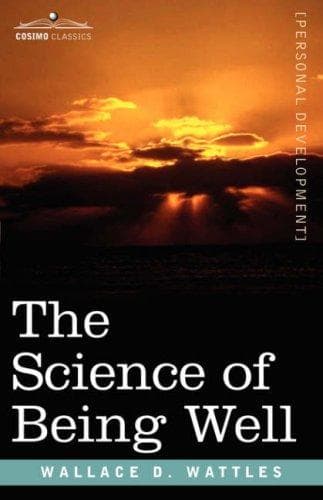
The Science of Being WellWattles, W. D. (Wallace Delois)
Science
The Science of Being Well
Wattles, W. D. (Wallace Delois)
Health; Mental healing; New Thought
The less you go into the detailed study of physiology, the better for
you. Our knowledge of this science is very imperfect, and leads to
imperfect thought. Imperfect thought causes imperfect functioning,
which is disease. Let me illustrate: Until quite recently, physiology
fixed ten days as the extreme limit of man's endurance without food; it
was considered that only in exceptional cases could he survive a longer
fast. So the impression became universally disseminated that one who was
deprived of food must die in from five to ten days; and numbers of
people, when cut off from food by shipwreck, accident, or famine, did
die within this period. But the performances of Dr. Tanner, the
forty-day faster, and the writings of Dr. Dewey and others on the
fasting cure, together with the experiments of numberless people who
have fasted from forty to sixty days, have shown that man's ability to
live without food is vastly greater than had been supposed. Any person,
properly educated, can fast from twenty to forty days with little loss
in weight, and often with no apparent loss of strength at all. The
people who starved to death in ten days or less did so because they
believed that death was inevitable; an erroneous physiology had given
them a wrong thought about themselves. When a man is deprived of food he
will die in from ten to fifty days, according to the way he has been
taught; or, in other words, according to the way he thinks about it. So
you see that an erroneous physiology can work very mischievous results.
No Science of Being Well can be founded on current physiology; it is not
sufficiently exact in its knowledge. With all its pretensions,
comparatively little is really known as to the interior workings and
processes of the body. It is not known just how food is digested; it is
not known just what part food plays, if any, in the generation of force.
It is not known exactly what the liver, spleen, and pancreas are for, or
what part their secretions play in the chemistry of assimilation. On all
these and most other points we theorize, but we do not really know.
When man begins to study physiology, he enters the domain of theory and
disputation; he comes among conflicting opinions, and he is bound to
form mistaken ideas concerning himself. These mistaken ideas lead to the
thinking of wrong thoughts, and this leads to perverted functioning and
disease. All that the most perfect knowledge of physiology could do for
man would be to enable him to think only thoughts of perfect health, and
to eat, drink, breathe, and sleep in a perfectly healthy way; and this,
as we shall show, he can do without studying physiology at all.
Public-domain text, read in full here on John Shaqi.
Reviews
Reviews
No reviews yet
Be the first to share your thoughts on this work.
Join the Discussion
Join the discussion
Sign in to leave a comment or review.
Sign InorCreate an account