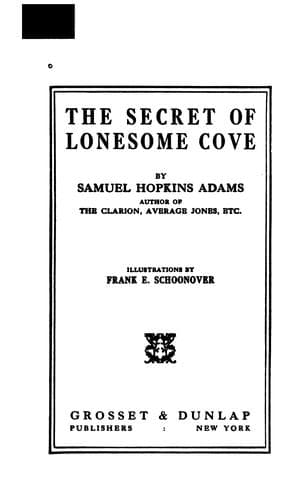
Detective and mystery stories; New England -- Fiction
While I talked, I sketched her and studied her. Young as she seemed, she
had been much about the world, knew her Europe, had met and talked with
men of many pursuits, and had taken from all sources tribute for her
mind and color for her imagination. She had read widely, too, and had an
individual habit of thought. Combined with all her cosmopolitanism was a
quaint and profound purity of standards. I remember her saying once—it
was one of her rare flashes of self-revelation—“I am an anomaly and an
anachronism, a Puritan in modern society.” After her first visit she did
not ride on her horse; but came across lots and through the side hedge,
swinging down the hillside yonder with her light dipping stride that
always recalled to me the swoop of a swallow, her gloved hands usually
holding a slender stick.
All those sketches that you saw were but studies for a more serious
attempt to catch and fix her personality. (_Comment by C. K._: _Couldn’t
he have given me in two words her height and approximate weight?_) I did
it in pastel, and, if I missed something of her tender and changeful
coloring, I at least caught the ineffable wistfulness of her expression,
the look of one hoping against hope for an unconfessed happiness.
Probably I had put more of myself into it than I had meant. A man is
likely to when he paints with his heart as well as his brain and hand.
When it was done I made a little frame for it, and lettered on the frame
this line:
“And her eyes dreamed against a distant goal.”
It was the next day that she read the line. I saw the color die from her
face and flood back again.
“Why did you set that line there?” she breathed, her eyes fixed on me
with a strange expression. (_Comment by C. K._: _Rossetti again. The
dead woman of the beach quoted “The House of Life,” also._)
“Why not?” I asked. “It seems to express something in you which I have
tried to embody in the picture. Don’t you like it?”
She repeated the line softly, making pure music of it. “I love it,” she
said.
At that, I spoke as it is given to a man to speak to one woman in the
world when he has found her. She listened, with her eyes on the pictured
face. But when I said to her, “You, who have all my heart, and whose
name, even, I have not—is there no word for me,” she rose, and threw out
her hands in a gesture that sent a chill through me.
“Oh, no! No!” she cried vehemently. “Nothing—except good-by. Oh, why did
you speak?”
I stood and watched her go. At the end of the garden walk she stooped
and picked a rose with her gloved fingers, and as she disappeared in the
thicket at the top of the hill I thought she half turned to look. That
was five interminable days ago. I have not seen her since. I feel it is
her will that I shall never see her again. And I must! You understand,
Kent, you must find her!
Public-domain text, read in full here on John Shaqi.
Reviews
Reviews
No reviews yet
Be the first to share your thoughts on this work.
Join the Discussion
Join the discussion
Sign in to leave a comment or review.
Sign InorCreate an account